 Pin It
 The first time I made bagels from scratch, I was convinced I'd need special equipment or years of training. Turns out, all I needed was patience and a sourdough starter I'd been nursing along for months. There's something almost meditative about shaping that dough into rings, watching the oven transform them into chewy, golden circles that taste nothing like the supermarket versions I'd grown up with. The real magic happened when I topped them with caramelized onions—that sweet, deep flavor completely changed how I thought about bagels. Now I make them regularly, and they've become the reason my friends actually want to come over for breakfast.
I remember making these for a lazy Sunday brunch with neighbors who were skeptical about homemade bagels until they bit into one still warm from the cooling rack. My kitchen smelled like caramelizing onions and toasted bread, and someone asked for the recipe before they'd even finished chewing. That moment—when food stops being just sustenance and becomes a reason to gather—is what keeps me coming back to this recipe.
Ingredients
- Active sourdough starter (100 g): This is your leavening agent and flavor foundation; make sure it's bubbly and at peak activity before you start, or your bagels won't rise properly.
- Bread flour (400 g): The high protein content is what creates that signature chewy texture that makes bagels different from regular bread.
- Whole wheat flour (50 g): This adds subtle nuttiness and keeps the crumb from feeling too dense.
- Sea salt (10 g): Enhances flavor and strengthens the gluten network, so don't skip it or reduce it.
- Granulated sugar (25 g): Feeds the starter and balances the tanginess of the sourdough.
- Lukewarm water (240 ml): Temperature matters here—too hot kills the starter, too cold and nothing ferments.
- Yellow onion (1 large): The slow cook transforms sharp raw onion into something sweet and almost caramel-like that tastes nothing like what you started with.
- Olive oil or unsalted butter (1 tbsp): Butter gives richer flavor, but olive oil works beautifully if you prefer.
- Barley malt syrup (1 tbsp): This is the secret ingredient that gives traditional bagel flavor; it's worth tracking down, though honey will substitute in a pinch.
- Baking soda (1 tsp): Raises the pH of the boiling water so the bagel exterior sets quickly, creating that characteristic crust.
Tired of Takeout? 🥡
Get 10 meals you can make faster than delivery arrives. Seriously.
One email. No spam. Unsubscribe anytime.
Instructions
- Caramelize your onions first:
- Heat oil or butter in a skillet over medium heat, add your finely chopped onions with salt, and let them cook undisturbed for a minute before stirring. They'll go from sharp and raw to golden and jammy in about eight to ten minutes—you'll know they're ready when they smell sweet and look like they've surrendered to the heat completely.
- Mix your dough together:
- In a large bowl, combine your active starter, both flours, salt, sugar, and water until everything is shaggy and rough. Don't worry about it looking perfect yet; you're just getting everything to know each other.
- Knead and rest:
- Work the dough for eight to ten minutes until it becomes smooth and elastic, then cover it and let it sit at room temperature for four hours. During those first two hours, perform two gentle stretch-and-folds (pull one side up and fold it over itself, rotate the bowl, repeat) every thirty minutes—this builds strength without aggressive kneading.
- Bulk ferment overnight:
- Cover the dough and refrigerate it for eight to twelve hours; the cold fermentation develops flavor and makes the dough easier to shape. When you open the fridge the next day, it should look puffy and smell distinctly tangy.
- Shape your bagels:
- Divide the cold dough into eight equal pieces, shape each into a ball, then poke your thumb through the center and gently stretch it into a ring with about a two-inch hole. The hole will close slightly as it proofs, so don't make it too small.
- Proof until puffy:
- Place shaped bagels on parchment paper, cover loosely, and let them rise at room temperature for one to two hours until they feel slightly springy when you poke them gently. They shouldn't fully double—you want them just puffy enough to suggest they're alive.
- Boil for the crust:
- Preheat your oven to 220°C (425°F) and bring water, barley malt syrup, and baking soda to a rolling boil in a large pot; this is where the magic happens. Boil one or two bagels at a time for exactly one minute per side—the water will get darker as you go, and that's completely normal.
- Top and bake:
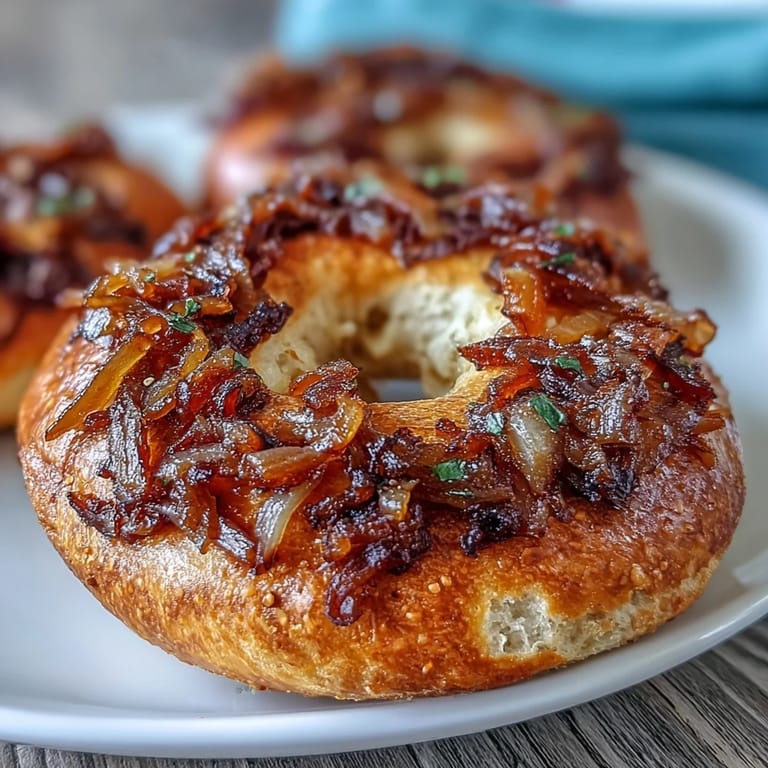
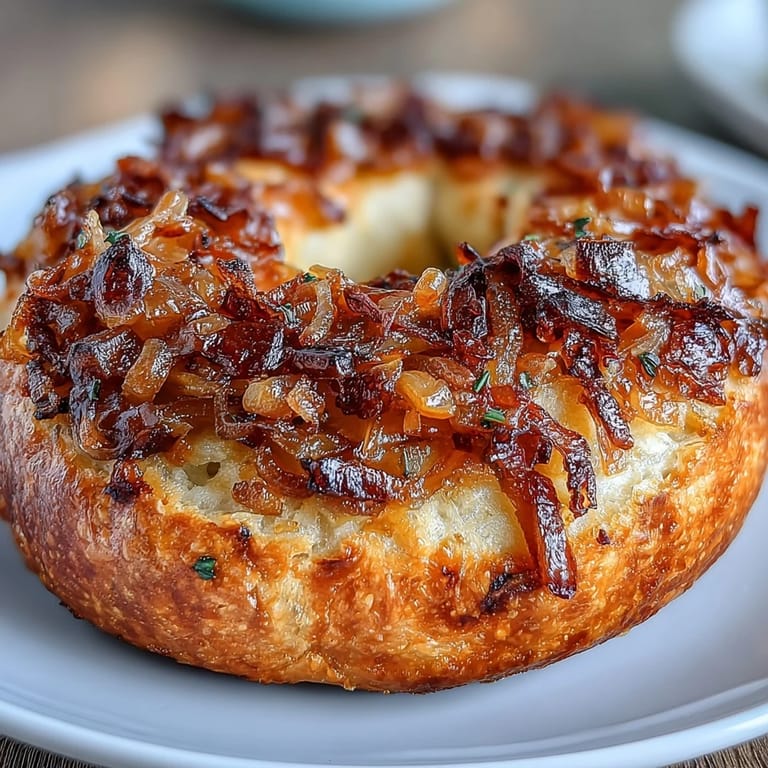
- Return boiled bagels to your baking sheet while they're still damp and press the cooled sautéed onions generously onto the wet surface so they stick. Bake for twenty to twenty-five minutes until they're deep golden brown and sound hollow when you tap the bottom.
- Cool before slicing:
- Transfer bagels to a wire rack and resist the urge to slice into one immediately—waiting just ten minutes lets the crumb set properly so you don't end up with a gummy interior.
 Pin It
 There was a moment when I pulled the second batch of bagels from the oven and my teenage daughter wandered into the kitchen just as they were cooling, drawn in by the smell. She tried one, and I watched her face shift from skepticism to genuine pleasure in about three seconds flat. That's when I realized these weren't just breakfast anymore—they'd become our thing, a small ritual that made our kitchen feel like somewhere people wanted to be.
Why the Overnight Fermentation Changes Everything
Patience with sourdough bagels isn't just about following instructions—it's about letting flavor develop naturally. When you refrigerate that dough overnight, the cold slows fermentation to a crawl, which lets the starter do its work properly and develop those complex, tangy notes that make sourdough taste like sourdough. The first time I skipped this step thinking I could speed things up, I got bagels that tasted flat and one-dimensional, nothing like the deep, layered flavor that happens with time.
Understanding the Boil
The boiling water bath might seem like an odd step if you've never made bagels before, but it's what separates bagels from bread. The heat sets the exterior quickly while keeping the inside soft and chewy; the baking soda alkalizes the water so the crust browns faster and develops that signature exterior. I used to think I could skip it or cut the time short, and every time I did, I ended up with something that was delicious but not quite a bagel—somewhere between bread and a bagel, which is honestly nowhere you want to be.
The Onion Topping That Steals the Show
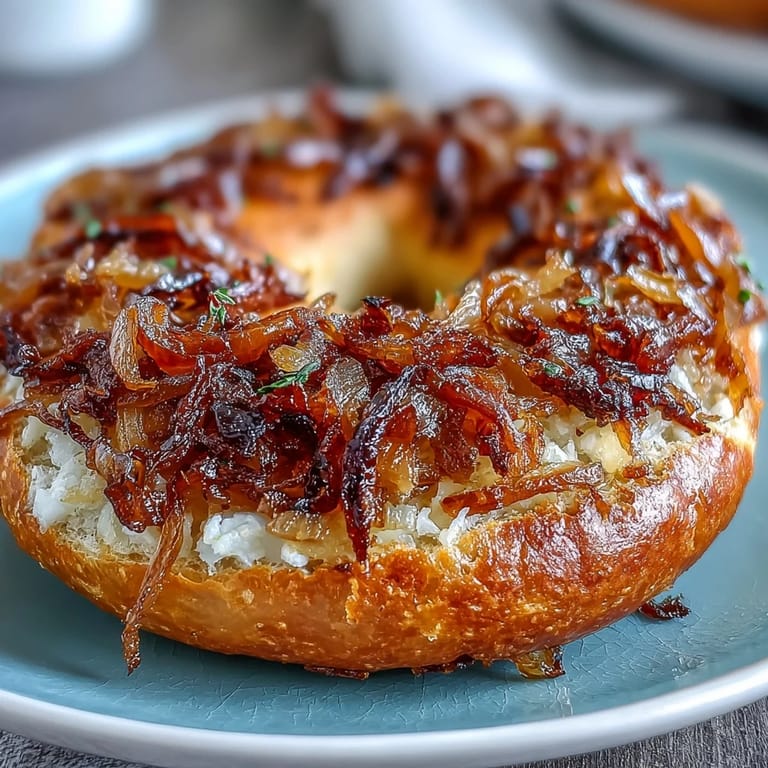
Caramelizing onions is one of those cooking techniques that rewards patience, and it transforms something simple into something genuinely special. The key is giving them time without crowding the pan, letting them soften and turn sweet and golden rather than rushed and pale. Once they cool, press them onto the still-damp bagels right out of the boiling water so they stick and bake into the crust.
- Don't rush the caramelization—low and slow wins here, even though it takes longer than you'd expect.
- If you want to get fancy, try mixing in a tiny pinch of your caramelized onions with some cream cheese for a spread that tastes restaurant-quality.
- Leftover bagels freeze beautifully for up to a month, and a quick toast brings them right back to life.
 Pin It
 Making bagels from scratch connected me to generations of bakers who've been perfecting this process for centuries, and somehow that knowledge makes them taste even better. Every time I pull a batch from the oven, I'm grateful for the patience this recipe teaches me.
Recipe Questions & Answers
- → What does the sourdough starter contribute?
It adds a tangy flavor and chewy texture while naturally leavening the dough for a better rise.
- → How are the onions prepared for topping?
Onions are finely chopped, sautéed in olive oil or butter with salt until soft and golden, enhancing sweetness.
- → Why boil the dough before baking?
Boiling sets the crust and creates a characteristic chewiness and shiny appearance on the bagels.
- → Can honey replace barley malt syrup in the boiling water?
Yes, honey works well as a substitute and adds a subtle sweetness to the crust.
- → What is the ideal fermentation time?
Allow 8–12 hours of fermentation refrigeration to develop deeper flavor and texture.
- → Are there any tips for shaping bagels?
Divide into equal pieces, shape into balls, then create holes in the center and stretch to about 2 inches diameter.