 Pin It
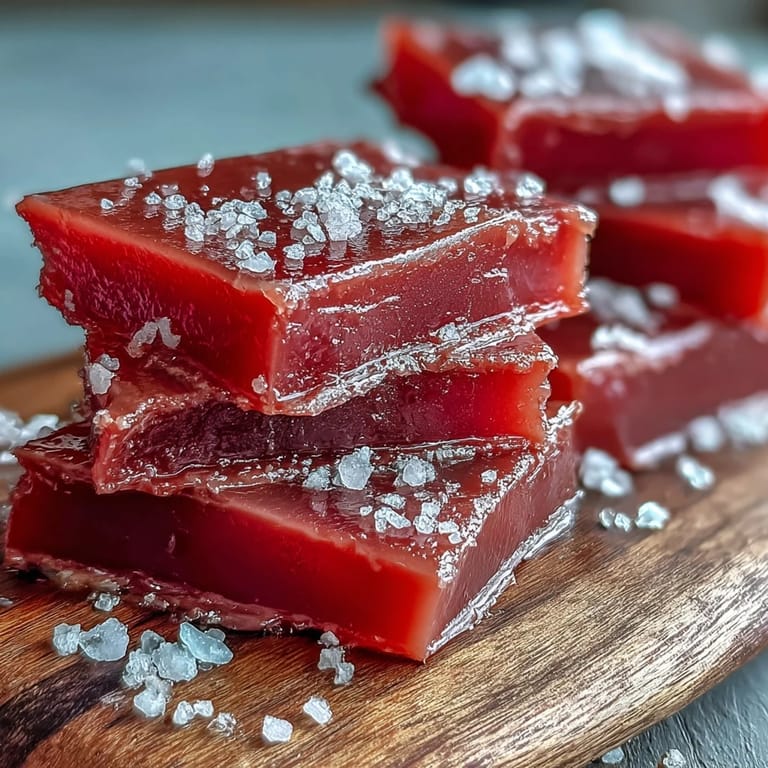
 Guava paste is a thick, fragrant preserve that captures the essence of tropical fruit in a dense, sliceable form. Known throughout Latin American cuisine as a versatile staple, this smooth paste offers a concentrated sweetness that is perfect for both dessert fillings and savory pairings.
Pin It Making your own guava paste at home allows you to control the sugar levels and ensures a fresh, vibrant flavor that far exceeds mass-produced versions. The slow-cooking process transforms fresh guavas and sugar into a glossy, ruby-colored treat that brightens any table.
Ingredients
Tired of Takeout? 🥡
Get 10 meals you can make faster than delivery arrives. Seriously.
One email. No spam. Unsubscribe anytime.
- Fruit: 1 kg (2.2 lbs) ripe guavas
- Sweetener: 450 g (2 1/4 cups) granulated sugar
- Acid: 2 tbsp fresh lemon juice
- Liquid: 120 ml (1/2 cup) water
Instructions
- Step 1
- Wash the guavas, trim the ends, and cut them into quarters. Remove seeds if desired (optional for extra smooth paste).
- Step 2
- Place guava quarters and water in a large saucepan. Bring to a boil over medium heat, cover, and simmer for 15–20 minutes until guavas are soft.
- Step 3
- Remove from heat. Use a food mill or fine mesh strainer to puree the guava pulp, discarding seeds and skins.
- Step 4
- Measure the resulting guava puree. For every cup of puree, use about 1 cup of sugar (adjust as needed based on yield).
- Step 5
- Return the guava puree to the pot. Add sugar and lemon juice.
- Step 6
- Cook over low heat, stirring constantly to prevent sticking, for 40–50 minutes. The mixture will thicken and pull away from the sides of the pan.
- Step 7
- When the paste is thick and glossy and holds its shape on a spoon, pour it into a parchment-lined loaf pan or baking dish. Smooth the top.
- Step 8
- Let cool at room temperature until firm, about 2–3 hours, then unmold and slice as desired.
Zusatztipps für die Zubereitung
For an extra smooth paste, ensure you strain the cooked guavas carefully to remove all seeds and skins. Using a fine mesh strainer will yield the most professional texture.
Varianten und Anpassungen
You can adjust the sugar content to taste depending on the natural sweetness of your fruit. If your guavas are very ripe and sweet, you may wish to reduce the sugar slightly.
Serviervorschläge
This paste is delicious when paired with sharp Manchego cheese and buttery crackers, or used as a decadent filling for pastries and empanadas.
 Pin It
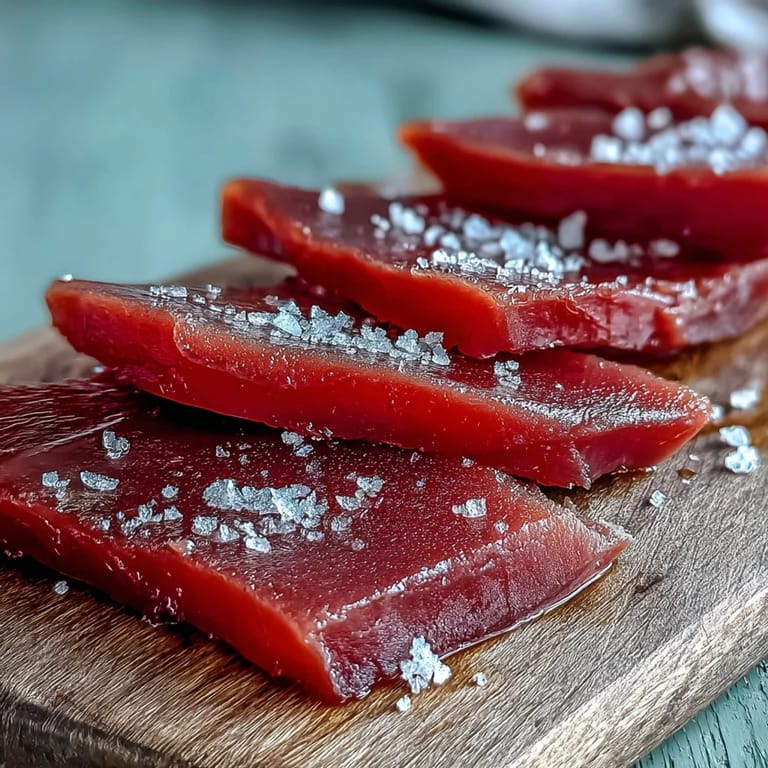
 Whether enjoyed on its own or as part of a larger dish, this homemade guava paste is a beautiful way to preserve the flavor of the tropics. Its vibrant color and smooth texture make it a standout addition to any kitchen pantry.
Recipe Questions & Answers
- → How do I know when the guava paste is ready?
The paste is ready when it becomes thick and glossy, holding its shape on a spoon without running off. You'll notice it pulling away from the sides of the pan as you stir. Another test is to drag your spoon through the mixture—if the trail stays visible rather than immediately filling back in, it's done.
- → Can I use frozen guavas instead of fresh?
Yes, frozen guavas work well for this preparation. Thaw them completely before starting, and drain any excess liquid that accumulates during thawing. You may need to adjust the cooking time slightly since frozen fruit can be more watery.
- → What's the best way to strain the guava pulp?
A food mill is ideal for removing seeds and skins while extracting the maximum amount of pulp. If using a fine mesh strainer, press the cooked guava through with the back of a spoon or spatula. For the smoothest results, strain twice or use a chinois if available.
- → How should I store the finished paste?
Once completely cooled and firm, wrap the paste tightly in plastic wrap or store in an airtight container in the refrigerator. It will keep for up to three months. For longer storage, cut into portions and freeze individually wrapped for up to six months.
- → What cheeses pair best with guava paste?
Manchego is the classic pairing, but the paste also complements other firm cheeses like aged cheddar, Gouda, or Parmesan. Soft cheeses like cream cheese or goat cheese work well too. The sweet-tart contrast balances salty, rich flavors beautifully on cheese boards.
- → Can I reduce the amount of sugar?
The sugar is essential for proper setting and preservation, but you can reduce it slightly if your guavas are very sweet. Keep in mind that less sugar may affect the final texture and shelf life. For a natural alternative, try honey or agave, though the setting properties may differ.