 Pin It
 I discovered black currant cheesecake at a small European café tucked away on a rainy afternoon, where the pastry case held this stunning marble-swirled creation that looked almost too elegant to eat. The moment the fork broke through that silky filling and hit the tart compote, I was undone—it felt like discovering a secret ingredient in my own dessert repertoire. Back in my kitchen, I spent weeks chasing that exact balance of creamy and tangy, learning that patience with the water bath and restraint with the mixer were the real magic. This version has become my go-to for impressing people without the fuss of a restaurant kitchen.
Last spring, I brought this to a dinner party where my friend Sarah had just moved into her new house, and watching her face when she tasted it—that quiet moment before she asked for the recipe—made the whole six-hour process feel completely worth it. She's made it three times since, and each time she texts me a photo of her version, and somehow that feels like the highest compliment.
Ingredients
- Digestive biscuits or graham crackers, crushed (200 g): These are your foundation, and crushing them yourself rather than buying pre-crushed gives you control over the texture—I learned this after one batch turned to powder.
- Unsalted butter, melted (80 g): The salt-free kind matters because you're controlling the seasoning yourself; melting it first ensures even distribution through the crust.
- Granulated sugar for crust (2 tbsp): Just enough to balance the butter and add a subtle sweetness without overshadowing what comes next.
- Salt (pinch): A tiny bit awakens all the other flavors; don't skip it even though it seems insignificant.
- Black currants, fresh or frozen (250 g): Frozen works beautifully here and is often easier to source than fresh; they release their juice just the same during cooking.
- Granulated sugar for compote (70 g): This balances the tartness of the currants—taste as you go and adjust if your berries are particularly sour.
- Lemon juice (1 tbsp): Brightens the compote and adds complexity that makes people ask what that flavor is.
- Cornstarch slurry (1 tsp cornstarch mixed with 1 tbsp water): This thickens the compote without cooking it to jam; mixing it with water first prevents lumps.
- Cream cheese, room temperature (700 g): Room temperature is non-negotiable—cold cream cheese won't blend smoothly and you'll end up with an oddly textured filling.
- Granulated sugar for filling (200 g): Beating this with the cream cheese creates an airy base that sets to that signature velvety texture.
- Large eggs, room temperature (3): Just like the cream cheese, cold eggs don't integrate properly and can create tiny lumps that bug you every time you take a bite.
- Sour cream (180 ml): This adds tang and richness while keeping the texture tender; it's the secret to a cheesecake that doesn't taste heavy.
- All-purpose flour (1 tbsp): A small amount stabilizes the filling without making it dense or cake-like.
- Pure vanilla extract (2 tsp): Use the real stuff—imitation tastes tinny against the delicate flavors in this cheesecake.
- Lemon zest (from 1 lemon): This echoes the compote and adds a brightness that lifts the whole dessert.
- Salt (pinch): Another tiny bit of salt in the filling amplifies all the other flavors.
Tired of Takeout? 🥡
Get 10 meals you can make faster than delivery arrives. Seriously.
One email. No spam. Unsubscribe anytime.
Instructions
- Prep your pan and preheat:
- Set your oven to 160°C (320°F) and get a 23 cm springform pan ready by greasing it and lining the bottom with parchment paper. This low temperature is crucial—it prevents the dreaded cracks that happen when cheesecake bakes too fast.
- Build the crust:
- Toss your crushed biscuits with melted butter, sugar, and salt until it looks like wet sand, then press it firmly into the pan's bottom. Bake for 10 minutes until it's golden and fragrant, then let it cool while you move on—this head start helps it stay crisp under the filling.
- Make the black currant compote:
- Combine black currants, sugar, and lemon juice in a small saucepan over medium heat, stirring occasionally until the berries burst and the mixture darkens, about 5 minutes. Stir in your cornstarch slurry and simmer for another minute or two until it thickens slightly, then set it aside to cool completely—this step is important because warm compote can cook the cheesecake unevenly.
- Blend the filling:
- Beat room-temperature cream cheese and sugar together until it's completely smooth and creamy, which usually takes a few minutes with an electric mixer. Add your eggs one at a time, beating well after each addition, then gently fold in the sour cream, flour, vanilla, lemon zest, and salt—this is where patience pays off because overmixing creates tiny air bubbles that lead to cracks.
- Swirl in the compote:
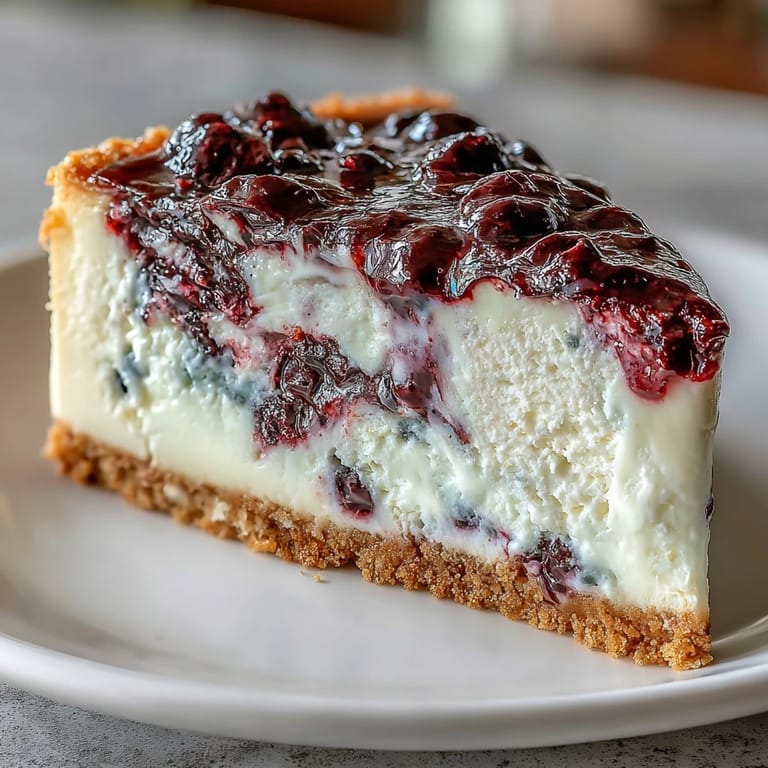
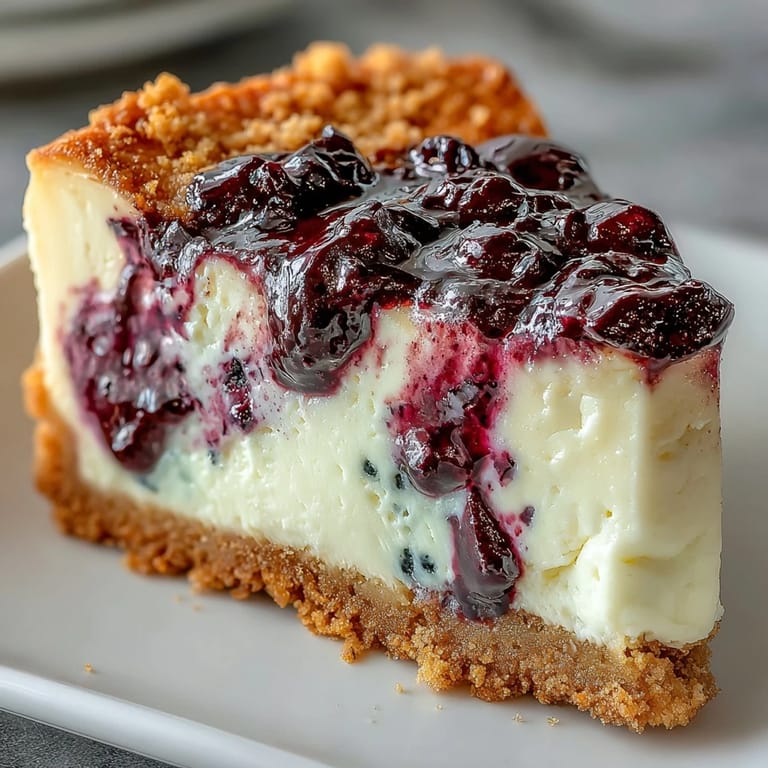
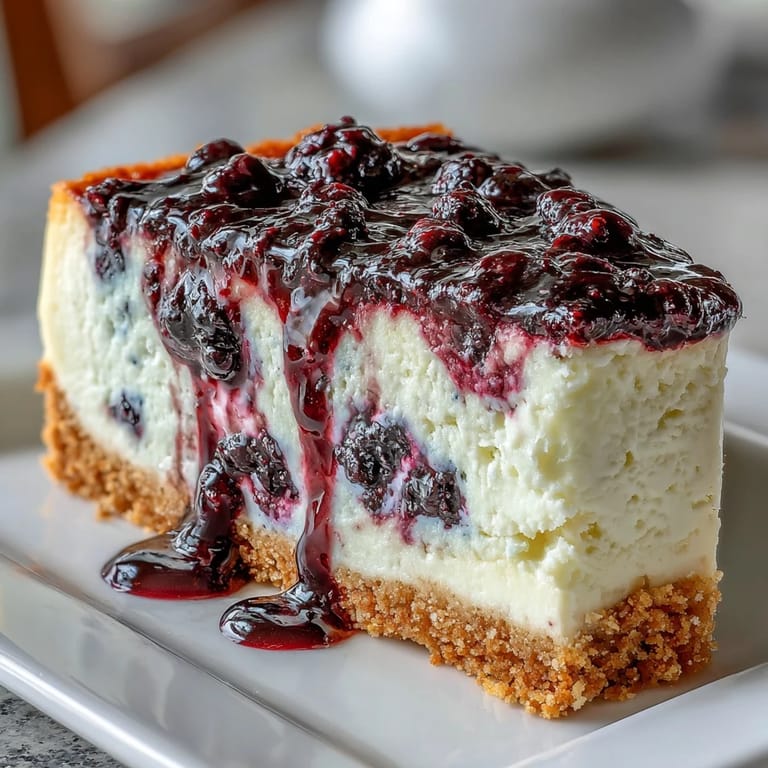
- Pour the filling over the cooled crust, then drop spoonfuls of the cooled compote across the surface. Take a skewer or thin knife and drag it gently through the compote to create those elegant swirls, being careful not to stir too vigorously or you'll lose the marbled effect.
- Water bath and bake:
- Place your springform pan inside a larger roasting tin and pour hot water around it until it reaches halfway up the sides—this gentle, humid heat is what creates that silky, crack-free texture. Bake for 50 to 60 minutes until the edges look set but the very center still jiggles slightly when you nudge the pan; that jiggle means it will continue cooking as it cools.
- Cool slowly and chill:
- Turn off the oven and crack the door open a few inches, letting the cheesecake sit inside for a full hour as the temperature drops gradually. After that, remove it to cool to room temperature on the counter, then refrigerate for at least 4 hours or overnight before slicing—rushing this step almost always results in cracks.
 Pin It
 There's something almost meditative about waiting for a cheesecake to cool, knowing that the longer you resist slicing into it, the more the flavors will settle and improve. My partner now knows that whenever I make this, the kitchen becomes quietly my own for those hours of waiting—it's become a ritual I look forward to, not just a dessert-making task.
Mastering the Marble Swirl
The swirl is where this cheesecake transforms from delicious to stunning, but it's also where I've made every possible mistake. I've dragged the skewer too aggressively and created muddy brown instead of marble, I've used warm compote that sank instead of stayed on top, and I've tried to be too artistic and ended up with chaotic streaks instead of elegant lines. The trick is gentle confidence—let the skewer do the work, moving slowly through the batter with just enough pressure to create a pattern without fully blending the two together.
Timing and Make-Ahead Magic
One of my favorite things about this cheesecake is that it actually improves with time, so you can make it a full day ahead without any stress. The flavors meld overnight, the texture becomes even silkier, and you'll actually thank yourself for planning ahead when you're just pulling it from the fridge rather than racing to finish it. I've also made the crust and compote the day before, storing them separately, which lets me assemble and bake on the actual day if I'm feeling organized.
Flavor Variations and Substitutions
While black currants are the star of this show, I've experimented with other berries and found that raspberries create a more delicate, floral swirl while blueberries give you something earthier and less tart. The beauty of this recipe is its flexibility—you can also try a mixture of berries, or even make a cherry compote if black currants are impossible to find in your area. Just remember that tartness is your friend here; sweeter berries might need a squeeze more of lemon juice to keep that sophisticated balance.
- Frozen berries work just as well as fresh and are often cheaper and more available.
- Gluten-free biscuits swap in seamlessly if you're catering to dietary needs.
- A touch of liqueur like cassis or chambord in the compote adds restaurant-level sophistication.
 Pin It
 Every time I unmold this cheesecake and see those deep purple swirls against the pale cream filling, I'm reminded that the best desserts aren't just about technique—they're about taking the time to do things right. Serve it with extra compote on the side, a dollop of whipped cream, or just a fork and a moment of peace.
Recipe Questions & Answers
- → How do I achieve a smooth, crack-free texture?
Use a water bath while baking and avoid overmixing the filling. Gradual cooling after baking also helps prevent cracks.
- → Can I substitute the black currants with other fruits?
Yes, blueberries or raspberries make excellent alternatives for the compote while retaining a similar tartness.
- → What is the purpose of chilling the dessert for several hours?
Chilling allows the filling to set firmly, enhancing the creamy texture and developing deeper flavors.
- → How should the crust be prepared for best results?
Combine crushed biscuits with melted butter and sugar, then press firmly into the pan before pre-baking to create a crisp base.
- → Is the dessert suitable for vegetarian diets?
Yes, it contains no meat or gelatin ingredients, making it appropriate for vegetarians.