 Pin It
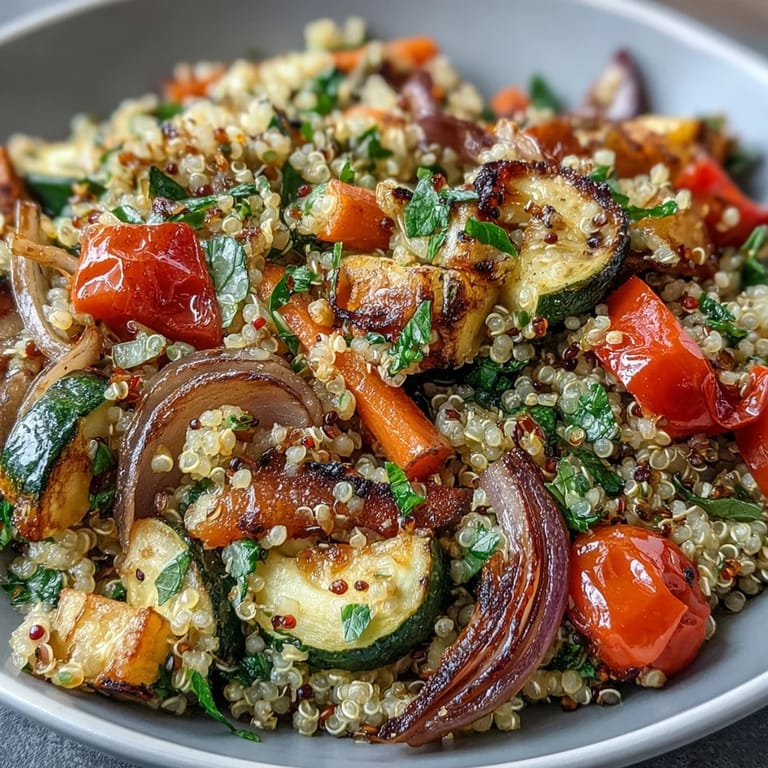
 There's something almost meditative about watching quinoa grains plump up as they absorb broth, turning from tiny pale seeds into fluffy little spheres. A few years back, I was experimenting with ways to make weeknight dinners feel less rushed, and this pilaf emerged one Tuesday evening when I had a handful of vegetables that needed rescuing from my crisper drawer. The house filled with the smell of roasting peppers and caramelizing onions, and by the time everything came together, I realized I'd stumbled onto something that felt both nourishing and genuinely exciting to eat.
I made this for a potluck at my partner's office once, and someone actually asked for the recipe before they'd even finished their plate—which, if you know anything about office potlucks, never happens. The bright colors were part of it, sure, but I think what won people over was how the toasted spices and herbs made something feel restaurant-quality without any fussiness. Watching someone go back for seconds of a vegetable dish at a potluck feels like a small victory.
Ingredients
- Quinoa, rinsed: Rinsing removes bitterness and that chalky coating that most people find off-putting their first time trying quinoa.
- Vegetable broth or water: Broth adds quiet depth where water would be neutral—use a quality one you'd actually drink.
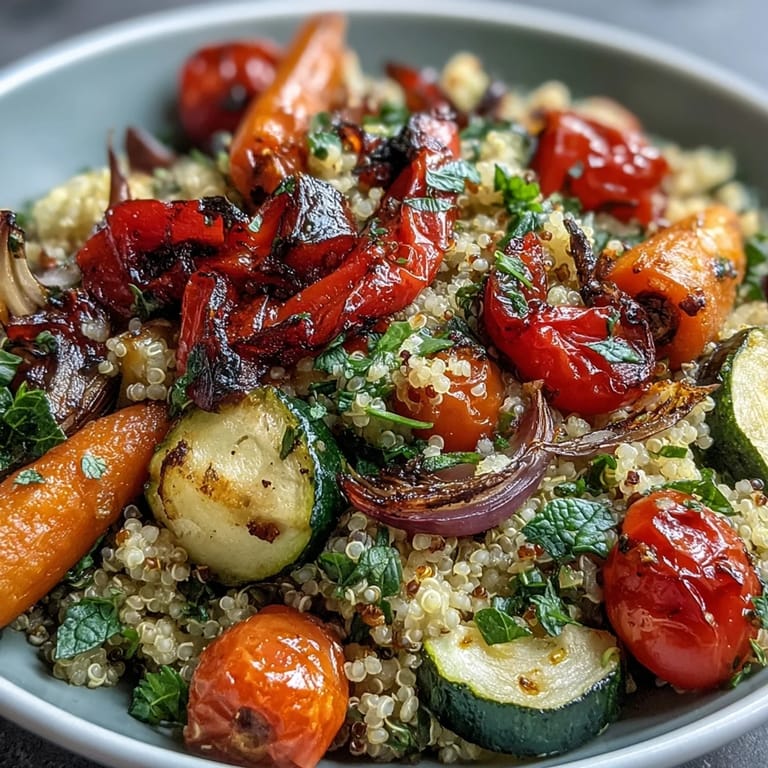
- Red bell pepper, zucchini, carrot, red onion, cherry tomatoes: Mix colors for visual appeal and nutrient diversity, and choose vegetables at their peak ripeness for better flavor.
- Olive oil: You'll use it twice—once for roasting, once for sautéing aromatics—so choose one you genuinely like the taste of.
- Garlic, cumin, thyme, smoked paprika: These four build a warm, earthy foundation that ties everything together without overpowering.
- Fresh parsley and mint: Add these at the very end so their brightness cuts through the richness and feels alive on your tongue.
- Lemon juice: This is the secret hand that brings every flavor into focus and prevents the whole dish from feeling heavy.
Tired of Takeout? 🥡
Get 10 meals you can make faster than delivery arrives. Seriously.
One email. No spam. Unsubscribe anytime.
Instructions
- Heat your oven and prep vegetables:
- Get that oven to 425°F and while it's warming, dice everything into similar-sized pieces so nothing finishes cooking before anything else. Toss your vegetables with olive oil, salt, and pepper directly on the baking sheet—less cleanup, and the oil coats evenly.
- Roast until golden:
- Spread everything in a single layer and roast for 20 to 25 minutes, stirring once halfway through. You're looking for the edges to turn golden and caramelized, which is where the flavor actually lives.
- Cook quinoa while vegetables roast:
- In a medium saucepan, bring your rinsed quinoa and broth to a boil, then drop the heat to low, cover, and let it simmer gently for 15 minutes. The quinoa is done when the little white spirals appear and the liquid disappears.
- Let quinoa rest:
- Once off the heat, keep it covered and let it sit undisturbed for 5 minutes—this matters more than it sounds. Then fluff it with a fork so each grain stays separate instead of clumping.
- Toast your spices:
- In a large skillet over medium heat, warm just a drizzle of olive oil, add your minced garlic, and let it become fragrant for about 30 seconds. Stir in the cumin, thyme, and paprika so they bloom and release their essential oils.
- Combine everything warm:
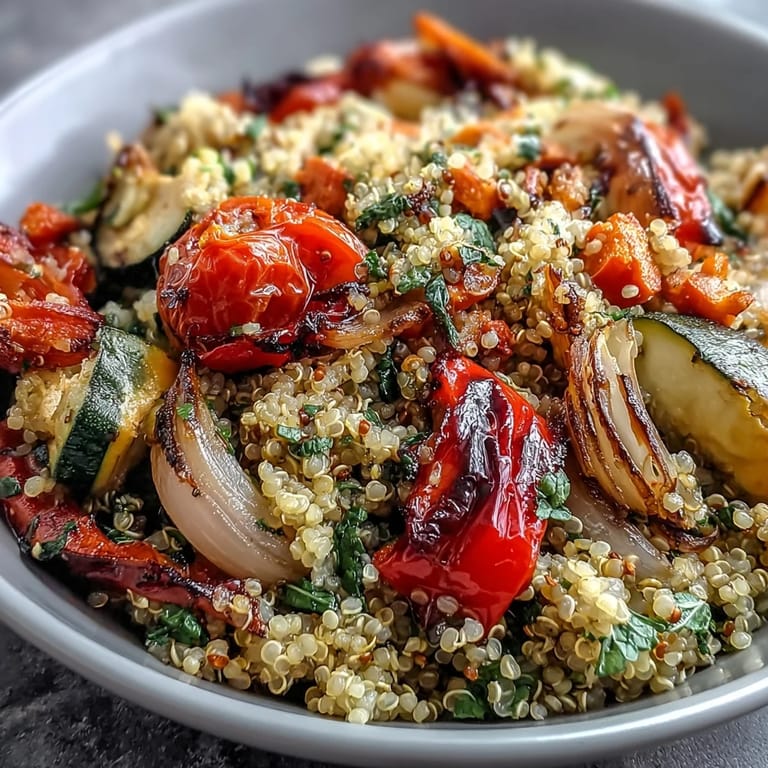
- Add your cooked quinoa and roasted vegetables to the skillet with the spiced oil, toss gently to coat everything evenly, and let it warm through for a minute or two. The goal is to marry the flavors without breaking down the vegetables.
- Finish with brightness:
- Finish with brightness:
- Remove from heat and stir through the fresh parsley, mint if you're using it, and lemon juice. Taste and adjust salt and pepper, then serve warm or let it cool to room temperature.
 Pin It
 The first time someone told me they actually craved this dish and made it again on their own, something clicked for me about cooking. It wasn't fancy or complicated, but it was satisfying in a way that felt real. That's when I understood that the best meals are the ones that make people want to return to the kitchen.
Why Roasting Makes All the Difference
Roasting isn't just a cooking method—it's flavor development. When you expose vegetables to that high, dry heat, their natural sugars caramelize and concentrate, which is impossible to achieve by sautéing or steaming alone. The first time I made this by sautéing everything in a pan, it was fine but forgettable. The moment I switched to roasting, people actually noticed and commented on the sweetness and depth.
Seasonal Flexibility That Actually Works
This dish thrives on adaptation, which means you're not locked into these exact vegetables. In summer, I lean into cherry tomatoes and zucchini, while autumn brings me butternut squash and Brussels sprouts. Spring is all about asparagus and peas if I'm feeling lighter. The spice blend stays constant, so the pilaf always tastes like itself regardless of what vegetables you're roasting.
Storing and Serving Ideas
Cold pilaf straight from the fridge is genuinely better than hot leftovers, so don't hesitate to make this a day ahead. It keeps for up to four days in an airtight container and works equally well as a light lunch, a side dish next to grilled protein, or even as a generous salad if you drizzle a bit more lemon juice over it. The flavors actually deepen slightly as everything sits together overnight.
- Pair it with grilled chicken or fish if you want something more substantial for dinner.
- Stir in cooked chickpeas or white beans if you're making this your main protein source.
- Add a dollop of plain yogurt or tahini on top for creaminess without dairy.
 Pin It
 This pilaf quietly became a staple in my kitchen because it works when you're tired, when you're trying to eat better, when you have random vegetables needing a home, and when you want something that actually tastes good. Make it once and you'll probably make it again.
Recipe Questions & Answers
- → Can I use different vegetables?
Absolutely. Swap in any seasonal vegetables you enjoy such as squash, eggplant, broccoli, or asparagus. The roasting method works well with most vegetables.
- → How do I store leftovers?
Store in an airtight container in the refrigerator for up to 4 days. Reheat gently in the microwave or enjoy cold as a grain salad.
- → Can I make this ahead?
Yes. Roast the vegetables and cook the quinoa up to 2 days ahead. Combine and finish with fresh herbs and lemon just before serving.
- → Is this suitable for meal prep?
Perfect for meal prep. Portion into containers and keep refrigerated. The flavors actually improve after a day or two as they meld together.
- → How can I add more protein?
Stir in a can of drained chickpeas, white beans, or lentils during the final heating. Crumbled feta or grilled chicken also work well if not following vegan guidelines.