 Pin It
 My friend Sarah invited me to a hot pot dinner on a freezing January night, and I walked in expecting just another meal. Instead, I found myself hunched over a bubbling pot at the table, chopsticks in hand, cooking my own dinner piece by piece while everyone laughed and told stories. It was chaotic and warm and felt nothing like the formal dinner experiences I'd grown up with. That night, I understood why hot pot has been bringing people together for centuries across Asia—it's not just food, it's permission to slow down and share a moment.
I made this for my sister's birthday gathering, and watching my meat-loving cousin tentatively try a piece of tofu while the vegetarian guest praised the depth of the broth made me realize how hot pot creates these unexpected moments of openness. By the end of the night, everyone had discovered something they didn't expect to love, and nobody was counting calories or worrying about perfection.
Ingredients
- Chicken or vegetable broth (2.5 liters): This is your canvas, so use the good stuff—homemade if you can manage it, or at least a broth you'd drink on its own.
- Garlic and ginger (2 cloves sliced garlic, 5 cm piece ginger): These two transform plain broth into something aromatic and grounding; don't skip the slicing step because it matters more than you'd think.
- Soy sauce, rice vinegar, sesame oil (1 tablespoon each of vinegar and sesame oil, 2 tablespoons soy sauce): This holy trinity is what makes people ask for your recipe—the balance of salty, tangy, and nutty is what lingers on the tongue.
- Dried shiitake mushrooms and optional chili: The mushrooms add an umami depth that regular grocery store broth can't match, while the chili is your heat control.
- Thinly sliced beef, chicken, pork, or tofu (300 g): Ask your butcher to slice the meat paper-thin; it cooks in seconds and tastes dramatically better than if you do it yourself at home.
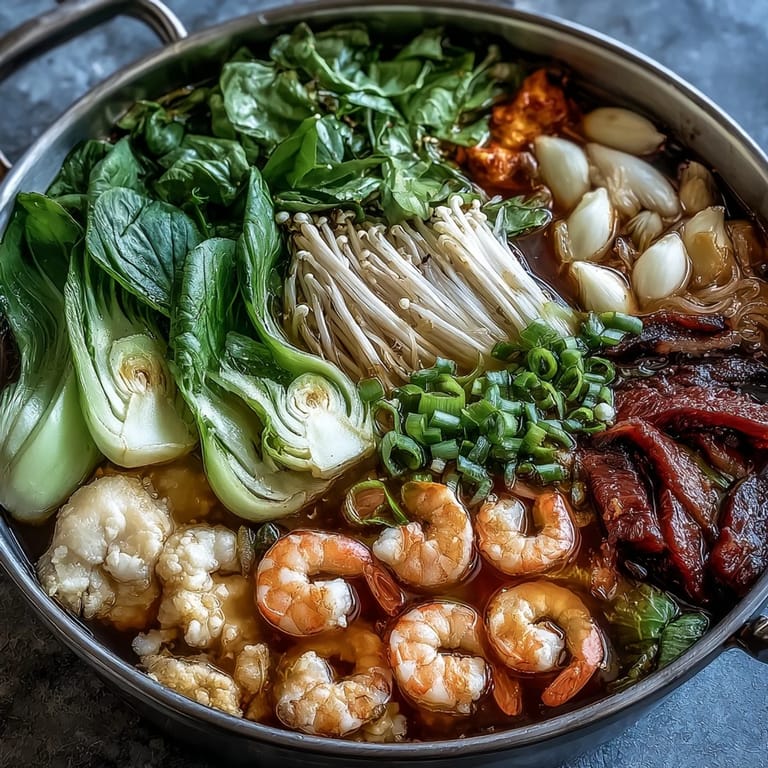
- Shrimp (200 g peeled and deveined): Doing this yourself takes patience but saves money, though honestly I've done both and the premade route is fine.
- Firm tofu (200 g cubed): Cube it just before cooking so it doesn't absorb any stray smells from the fridge.
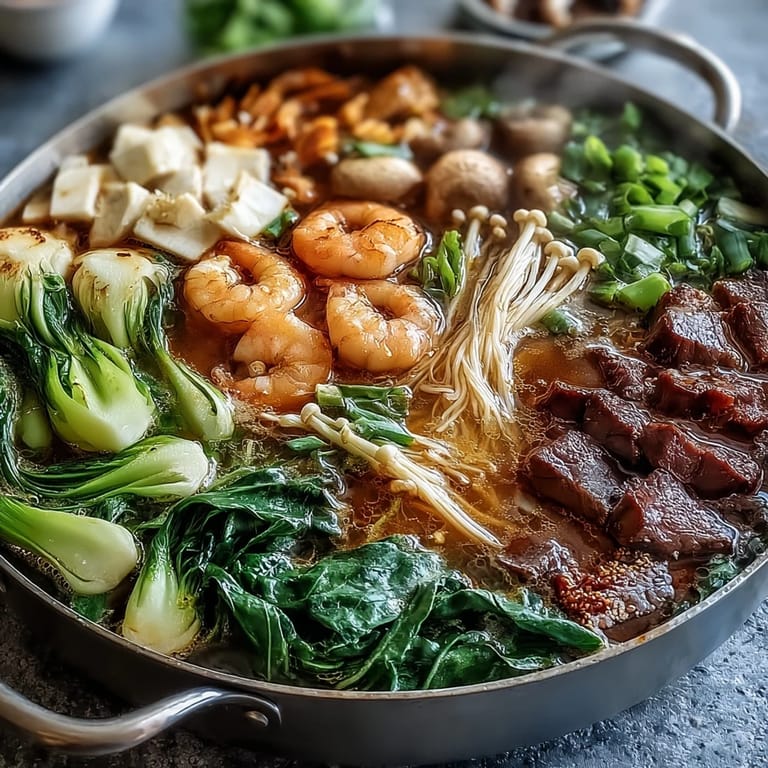
- Napa cabbage, bok choy, mushrooms, carrot, snow peas, corn, scallions: Buy what looks fresh at your market that day—hot pot is forgiving enough that substitutions work beautifully.
- Rice or glass noodles (200 g): These absorb the broth flavor better than wheat noodles and feel lighter in a bowl.
- Dipping sauces and garnishes: Cilantro, sesame seeds, lime wedges, plus store-bought soy sauce, chili oil, and hoisin give everyone control over their final flavor.
Tired of Takeout? 🥡
Get 10 meals you can make faster than delivery arrives. Seriously.
One email. No spam. Unsubscribe anytime.
Instructions
- Build your broth foundation:
- Combine your broth with sliced garlic, ginger, soy sauce, rice vinegar, sesame oil, dried mushrooms, and chili in a large pot. Bring everything to a boil so the aromatics wake up, then drop the heat to a gentle simmer and let it sit for at least thirty minutes. You'll notice the smell getting deeper and more complex as time passes; that's exactly what you want.
- Prep your ingredients like you're setting a stage:
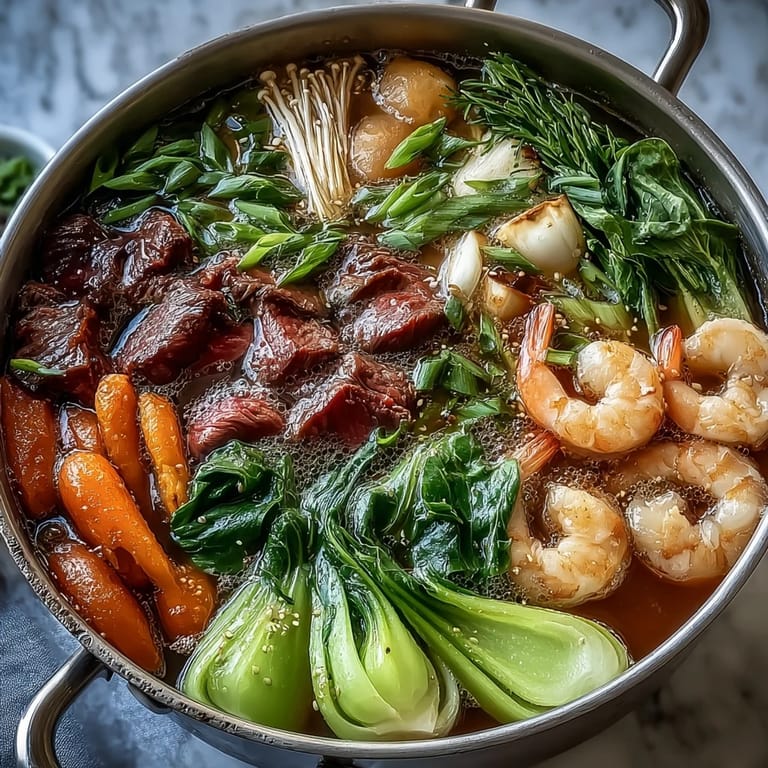
- Arrange all your proteins and vegetables on separate platters so they're easy for people to grab. Thin slices cook faster than chunky cuts, so take a moment to slice everything uniformly. This step feels tedious but makes the actual cooking part feel like play instead of stress.
- Ready your noodles ahead:
- Soak the noodles in warm water according to the package timing, then drain them well so they're not waterlogged. Set them in a bowl and they'll stay perfectly textured until someone decides they want to cook them.
- Set up your table theater:
- Place a portable burner or induction cooktop in the center of the table with your shallow pot filled with the strained, simmering broth. Make sure everyone can reach the pot comfortably and that you have enough bowls, chopsticks, and slotted spoons so no one's waiting around. The setup is half the fun.
- Cook as you go, together:
- Let each person cook what they want using chopsticks or slotted spoons—proteins take one to three minutes (watch for color changes in meat or firmness in tofu), while vegetables and noodles take two to five minutes. There's no rush and no wrong way to do this; the point is the pace and the conversation, not efficiency.
- Finish with sauce and ceremony:
- Scoop cooked items into bowls and let everyone customize with their choice of dipping sauces, cilantro, sesame seeds, and lime. Watch people's faces as they discover which combination becomes their favorite.
 Pin It
 The real magic of hot pot happened when my usually quiet father started explaining to my niece why the mushrooms cook slower than the spinach, and suddenly he was teaching her something without it feeling like a lesson. That's when I realized this meal does more than feed people—it gives permission for natural conversation and curiosity to happen across a table.
Choosing Your Proteins Wisely
Not all proteins cook the same way in hot water, and learning this changed how I approach the whole meal. Beef and pork are forgiving—they stay tender even if someone leaves them in a few seconds too long—while seafood demands attention or it toughens up. Tofu doesn't need much time at all; a minute or two of gentle heat is enough. I've learned to gently remind first-timers that shrimp turns pink quickly, which is your visual signal to fish it out before it becomes rubber.
The Broth Really Matters
You can skimp on fancy ingredients elsewhere, but the broth deserves investment because it's the foundation of every bite. I spent months using decent store-bought broth before finally trying homemade, and the difference was noticeable enough that guests mentioned it without my prompting. The aromatics—garlic, ginger, mushrooms—need time to open up, so don't rush the thirty-minute simmer. Think of it as flavoring building on itself rather than extracting taste, which is a subtle but important mindset shift.
Making It Work for Different Diets
One evening, I had four people with different dietary needs around my table, and hot pot handled it perfectly because everyone cooked their own meal. Vegetarians loaded up on tofu and vegetables, my friend with a shellfish allergy avoided the shrimp section, and someone avoiding gluten grabbed the rice noodles instead of wheat ones. The beauty is that no one felt restricted or like they were eating a different meal from everyone else.
- For vegetarian or vegan versions, swap vegetable broth and load up on mushroom varieties, leafy greens, and tofu—the depth is still there.
- Gluten-free diners can use tamari instead of soy sauce and rice noodles, which are usually naturally gluten-free anyway.
- If someone has a shellfish allergy, simply keep the shrimp separate and let them stick to other proteins without any awkwardness.
 Pin It
 Hot pot is less about following a recipe perfectly and more about creating space for people to cook together and take care of themselves while talking. Make the broth with love, prep your ingredients without stress, and then step back and let the meal unfold naturally.
Recipe Questions & Answers
- → What broths work best for this hot pot?
Chicken or vegetable broth infused with garlic, ginger, soy sauce, rice vinegar, sesame oil, and dried mushrooms provides a rich and aromatic base.
- → How long should the broth simmer?
Simmering the broth gently for at least 30 minutes allows flavors to develop fully before straining out solids.
- → What types of proteins can be used?
Sliced beef, chicken, pork, tofu, and shrimp all cook quickly and complement the fresh vegetables.
- → How are noodles prepared for serving?
Rice or glass noodles should be soaked in warm water, drained, and added to the pot where they cook in a few minutes.
- → Can this meal accommodate dietary restrictions?
Yes, by choosing vegetable broth and tofu, it suits vegetarian and vegan diets; gluten-free soy sauce and noodles can be used as needed.
- → What garnishes enhance the hot pot experience?
Fresh cilantro, sesame seeds, lime wedges, chili oil, soy sauce, and hoisin sauce add layers of flavor and texture.