 Pin It
 My neighbor Maria brought over this soup one chilly afternoon, and I watched her move through the kitchen with such ease—the way she zested that lemon right over the pot, how she knew exactly when the chicken was done just by listening to the gentle simmer. She called it her weeknight lifeline, the thing she makes when she wants something that feels like home but doesn't demand hours of attention. I've made it dozens of times since, and it's never disappointed.
There was this one Sunday when my partner was sick, and I made this soup almost without thinking. He had it three days in a row, each time asking for more dill on top, and by day three he was well enough to sit at the table instead of bed. That's when I realized this wasn't just a nice recipe—it was the kind of thing people lean on when they need comfort and nutrition wrapped together.
Ingredients
- Boneless, skinless chicken breasts (2 breasts, about 400 g): Buy them roughly the same thickness so they cook evenly; if one is much thicker, pound it gently before adding to the pot.
- Low-sodium chicken broth (1.2 liters or 5 cups): The foundation of everything, so taste it first—if it's already quite salty, you'll want to hold back on extra salt at the end.
- Bay leaf (1): This one leaf transforms the broth into something deeper and more nuanced; don't skip it even though it seems small.
- Yellow onion, finely chopped (1 medium): Medium dice works best here—you want pieces that soften but still hold their shape through cooking.
- Carrots, peeled and diced (2 medium): Peel them first so you avoid any bitter skin; cut them slightly smaller than the onion so they cook at the same pace.
- Celery stalks, diced (2): This is what gives the soup its savory backbone; use the tender inner stalks if you have them.
- Garlic cloves, minced (3): Mince them just before cooking so the aroma is strongest; pre-minced garlic loses its punch quickly.
- Extra virgin olive oil (2 tablespoons): This is worth the good stuff—it carries the flavors forward and makes the soup feel Mediterranean.
- Pearl couscous (150 g or 3/4 cup): Pearl couscous is chewier and more interesting than regular couscous; it won't turn mushy in the broth.
- Lemon zest and juice (1 large lemon): Zest it before juicing so your microplane doesn't slip, and add the juice at the very end so it stays bright and fresh.
- Dried oregano (1/2 teaspoon): A little goes a long way here; it should whisper Greek flavors, not shout.
- Ground black pepper (1/4 teaspoon): Freshly ground makes all the difference if you have a pepper mill.
- Salt, to taste: Add it gradually at the end since the broth and feta both bring saltiness to the party.
- Feta cheese, crumbled (80 g or about 3 oz): Crumble it right before serving so it stays creamy on top; cold feta against hot soup is essential.
- Fresh dill, chopped (2 tablespoons): Buy it fresh and chop it moments before serving—dill loses its delicate flavor if it sits around.
- Lemon wedges, for serving: These are not optional; they're your last-minute brightener for anyone who wants more tang.
Tired of Takeout? 🥡
Get 10 meals you can make faster than delivery arrives. Seriously.
One email. No spam. Unsubscribe anytime.
Instructions
- Heat the olive oil and sauté the vegetables:
- In a large pot over medium heat, warm the olive oil until it shimmers slightly, then add your chopped onion, carrots, and celery together. Let them cook undisturbed for a couple of minutes so they pick up a little color, then stir and cook for about 5 minutes total until the onion becomes translucent and the whole kitchen smells sweet and vegetal.
- Wake up the garlic:
- Add your minced garlic and stir constantly for just 1 minute—you're listening for it to smell incredibly fragrant, which means the flavor is blooming into the oil. Don't let it brown or it'll turn bitter.
- Build the broth base:
- Pour in all your chicken broth slowly while stirring, making sure nothing sticks to the bottom of the pot. Drop in the bay leaf and turn up the heat just enough to bring everything to a gentle simmer—you'll see small bubbles breaking the surface but not a rolling boil.
- Cook the chicken gently:
- Place the chicken breasts into the simmering broth and let them cook for 12 to 15 minutes, depending on their thickness. The chicken is done when you cut into the thickest part and see no pink inside, or when it flakes easily with a fork.
- Shred and return the chicken:
- Carefully remove the cooked chicken to a cutting board and let it cool for a minute, then shred it into bite-sized pieces with two forks or chop it with a knife. Fish out the bay leaf and discard it, then return all the shredded chicken to the pot.
- Add the couscous and seasonings:
- Stir in the pearl couscous, dried oregano, lemon zest, and black pepper, then let everything simmer gently for 10 to 12 minutes until the couscous is tender but still has a slight chew to it. You'll know it's ready when you taste a grain and it's soft all the way through.
- Finish with brightness:
- Remove the pot from heat and squeeze in all your fresh lemon juice, stirring gently to distribute it. Taste the soup and add salt gradually until it tastes balanced—not aggressively salty, just right.
- Serve and garnish:
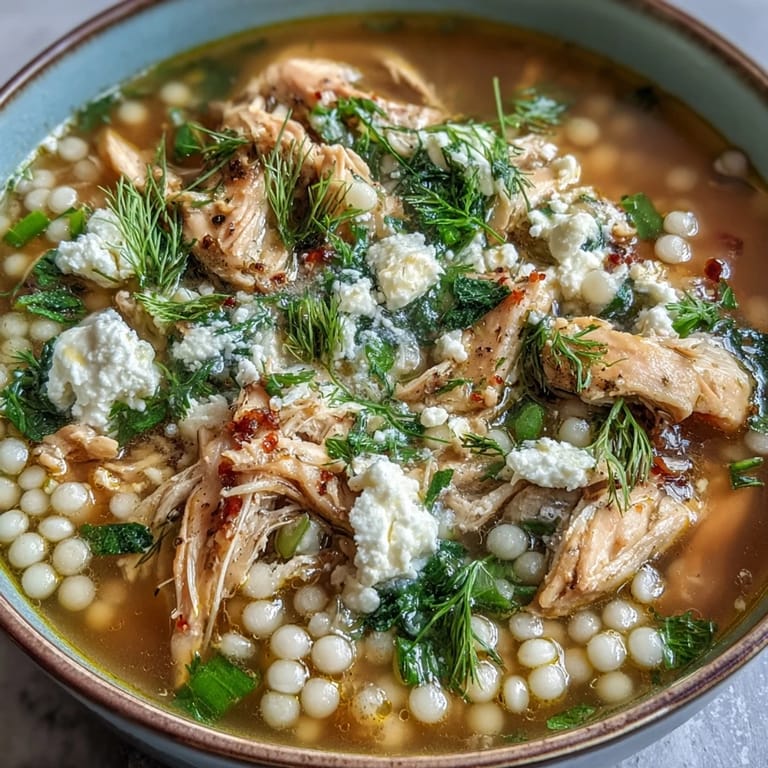
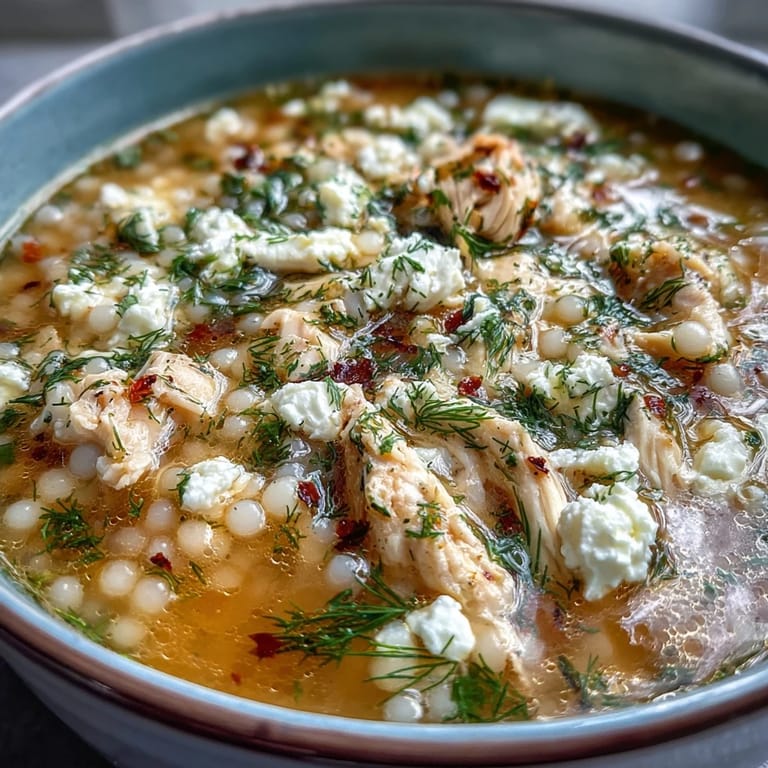
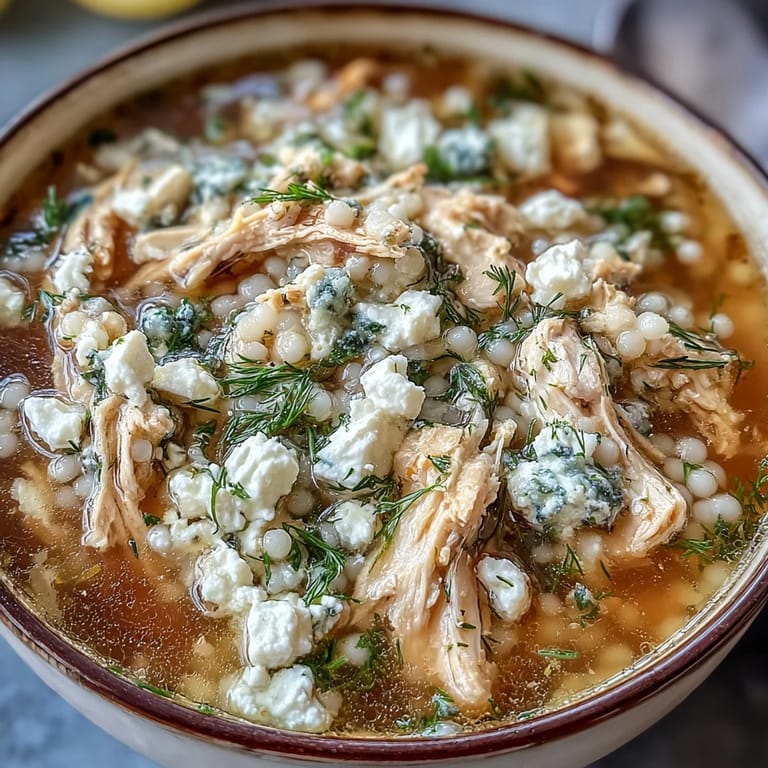
- Ladle the hot soup into bowls, then top each one with a handful of crumbled feta and a sprinkle of fresh dill. Set lemon wedges on the side for anyone who wants to squeeze in more brightness.
 Pin It
 I made this soup for my book club once, and halfway through the meal, someone asked if there was a secret ingredient because it tasted so much more put-together than the ingredient list suggested. It struck me that sometimes the best cooking isn't about complexity—it's about respecting each ingredient and letting them speak.
Why Pearl Couscous Matters Here
Pearl couscous is different from regular couscous in a way that matters to this soup. Regular couscous would absorb the broth and turn soft and almost mushy, while pearl couscous holds its shape and texture even after simmering, giving you actual bites of grain rather than soup-logged fluff. It's a small choice that makes the whole eating experience better.
The Lemon and Feta Partnership
The magic of this soup lives in how lemon juice and feta cheese play against each other. Feta is salty and rich and slightly tangy, while fresh lemon juice is bright and acidic. Together, they prevent the soup from ever feeling heavy or one-note, and they make you want to go back for another spoonful even when you're already full. When these two ingredients work together, they convince your whole body that this is comfort food.
Make It Your Own
This recipe is forgiving enough to bend to what you have on hand or what you're craving. I've added spinach, swapped in shredded rotisserie chicken when I was short on time, and once even threw in some white beans because I had them and thought they'd be nice. Each version has been good because the bones of the recipe are strong enough to support your experiments without falling apart.
- Stir in a handful of fresh spinach or kale in the last minute of cooking for added green vegetables that soften into the broth.
- Use bone-in chicken thighs instead of breasts for a richer, deeper flavor that comes from the bones simmering in the broth.
- Serve alongside warm crusty bread or pita so you can soak up every last spoonful of the lemony broth.
 Pin It
 This soup has become one of those recipes I turn to when I want to feel capable in the kitchen without spending all day there. It's the kind of meal that tastes like you care without asking you to perform any heroic cooking feats.
Recipe Questions & Answers
- → Can I use bone-in chicken for this dish?
Yes, bone-in chicken adds extra depth to the broth and enhances flavor, but adjust the cooking time accordingly.
- → What can I substitute for pearl couscous?
Small pasta like Israeli couscous or even quinoa can be used as alternatives depending on your preference.
- → How do I prevent the feta from becoming too salty?
Use crumbled feta sparingly and add salt gradually to keep balance without overpowering saltiness.
- → Can I add greens to this dish?
Yes, stirring in spinach or kale during the last minutes of cooking adds a fresh, nutritious element.
- → What herbs complement the lemon and oregano flavors here?
Fresh dill and oregano pair wonderfully, enhancing the brightness and earthy notes of the dish.