 Pin It
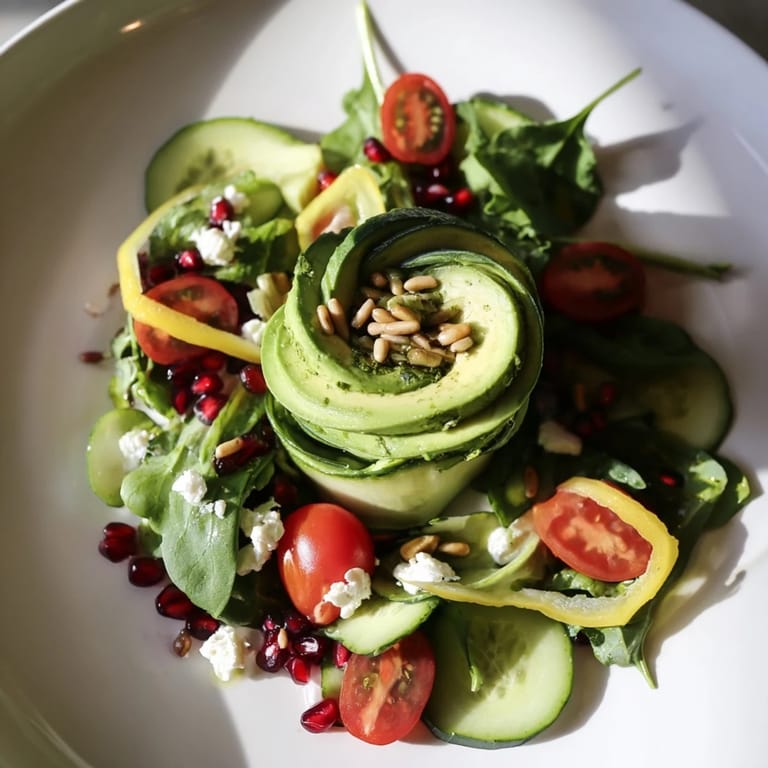
 I discovered this salad by accident while organizing my kitchen one autumn afternoon, staring at a bowl of pomegranate seeds and wondering how to make them the star instead of an afterthought. There's something about arranging food with intention that transforms the whole experience—suddenly you're not just eating, you're noticing. That spiral idea came from sketching on a napkin, trying to remember something I'd read about nature's patterns, and then I thought: why not make dinner proof that beauty and flavor don't have to compete?
I made this for my sister's boyfriend the first time, who'd admitted he was "not really a salad person," and watched his face shift when he saw it. He spent five minutes just looking before eating, and kept saying "but it tastes even better than it looks," which I think means something fundamental happened in his head about what a salad could be. That's when I knew this wasn't just a plate of vegetables.
Ingredients
- Mixed baby greens (4 cups): Choose a blend with different textures—arugula's peppery bite, spinach's softness, watercress's crisp snap—so each bite feels alive. Baby greens wilt less than larger leaves, which matters when you're building slowly.
- Cherry tomatoes (1 cup, halved): Halving them gives more surface area to catch light and dressing; pick ones that are just slightly soft when you squeeze them gently.
- Ripe avocado (1, sliced): Cut it the moment before assembly—even 10 minutes of air exposure dulls the color and introduces that slight brown edge nobody wants to see.
- Yellow bell pepper (1, thinly sliced): The yellow is crucial for the color progression; it's brighter than red and creates that visual momentum as your eye travels across the plate.
- Cucumber (1 small, thinly sliced): A thin, sharp mandoline cuts are your friend here, creating those translucent rounds that let light pass through.
- Pomegranate seeds (1/2 cup): These are your focal points—jewel-like and impossible to ignore—so don't hide them; let them anchor the spiral.
- Feta cheese (1/2 cup, crumbled): Crumble it by hand into uneven pieces; it photographs better and feels more intentional than pre-crumbled.
- Toasted pine nuts (1/4 cup): Toast them yourself in a dry pan for 3 minutes, shaking constantly, until golden and fragrant—it's the difference between a good salad and one you remember.
- Extra-virgin olive oil (3 tbsp): This is not the moment to economize; quality oil makes the dressing taste like it knows something the rest of the kitchen doesn't.
- Lemon juice (1 tbsp, freshly squeezed): Fresh is non-negotiable; bottled tastes like a promise the lemon didn't keep.
- Honey (1 tsp): Just enough to round out the sharpness and help the dressing emulsify without sweetening.
- Dijon mustard (1/2 tsp): The emulsifier that keeps oil and acid from going their separate ways, plus a subtle depth.
- Salt and pepper: Taste as you go; the feta adds saltiness, so start light and adjust at the end.
Tired of Takeout? 🥡
Get 10 meals you can make faster than delivery arrives. Seriously.
One email. No spam. Unsubscribe anytime.
Instructions
- Create your spiral canvas:
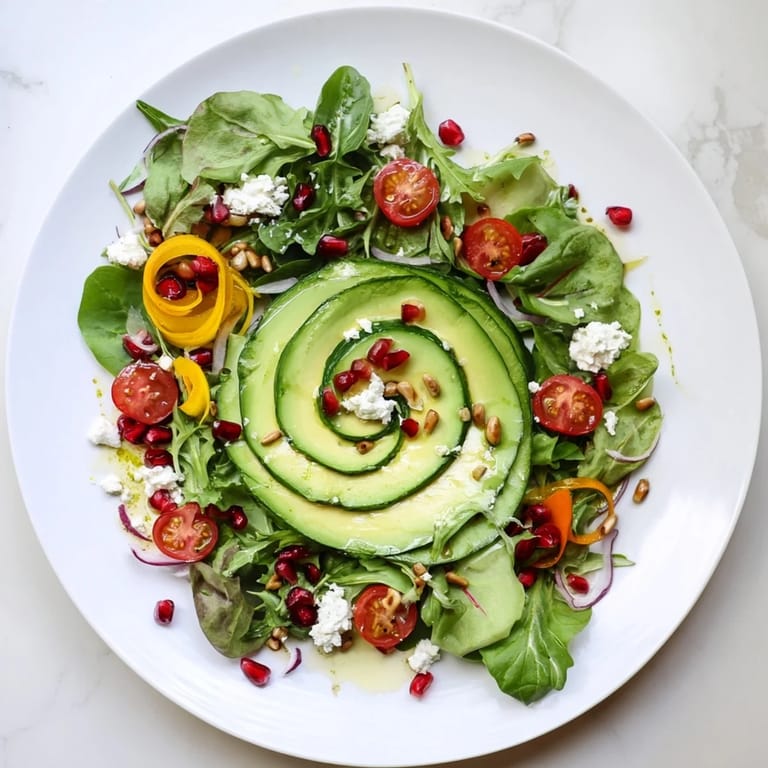
- Pour the greens onto your platter and use your hands to loosely arrange them in a sweeping spiral or curved line—don't overthink this; it's a suggestion, not a formula. Leave the center slightly exposed; this is where your focal point will live.
- Position the focal elements:
- Place your halved tomatoes and avocado slices at roughly 61.8% along the spiral (which honestly just means "slightly off-center where it looks balanced"). This is your gravitational center; everything else orbits outward from here.
- Build outward with color:
- Layer the bell pepper slices, then cucumber, creating a progression that feels like the arrangement is expanding naturally. Let each element slightly overlap the last, as if they're having a conversation.
- Crown with pomegranate:
- Scatter pomegranate seeds along the spiral, concentrating slightly more toward your focal point—they're too beautiful to distribute evenly.
- Add texture and richness:
- Sprinkle feta and toasted pine nuts, using a slightly heavier hand near the center to reinforce that focal area, then tapering lighter toward the edges.
- Finish with dressing:
- In a small bowl, whisk oil, lemon juice, honey, and mustard until it emulsifies into something creamy and glossy. Taste and season. Drizzle just before serving—a light hand preserves the arrangement.
 Pin It
 What made this salad matter to me wasn't the math or the name—it was that first moment someone stopped mid-conversation to really look at what I'd made. Food that beautiful demands attention, and attention is its own kind of gift.
The Art of Building a Salad That Lasts
Most salads fall apart the moment dressing touches greens, which is why this one is different. By placing ingredients thoughtfully and dressing at the last second, each component stays true to itself. The contrast between the cool crispness of fresh vegetables and the richness of feta and nuts creates a textural narrative that unfolds as you eat, not all at once.
Why Colors Matter Beyond Beauty
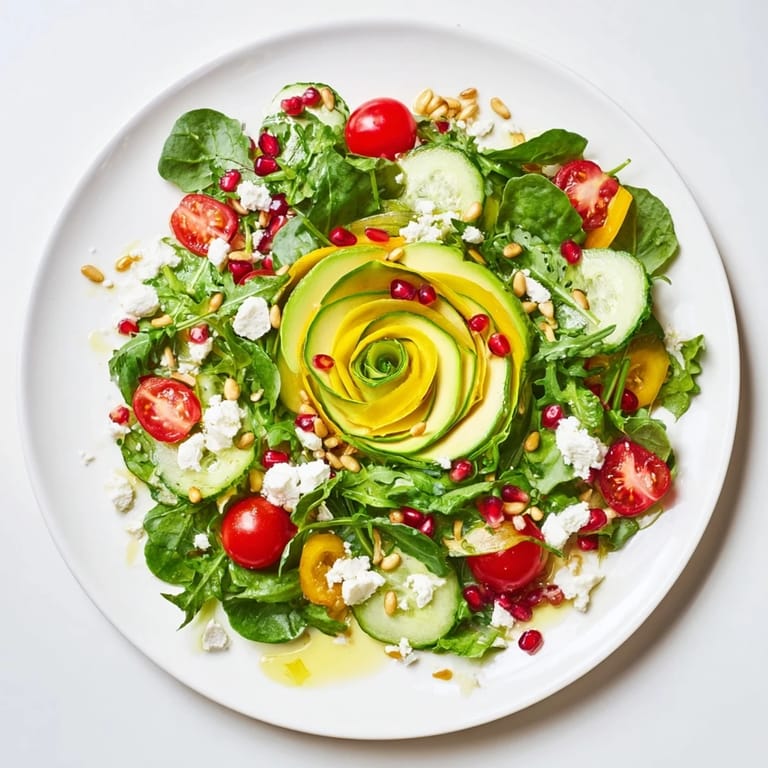
Arrange by color and you're not just making something Instagram-worthy—you're signaling flavor progression. The greens whisper, the yellows and reds speak louder, and the pomegranate seeds are the exclamation point. Your eye guides your fork, and your fork guides your palate. It's not pretentious; it's how our brains are wired to experience food. When ingredients are scattered randomly, we eat mechanically. When they're composed, we taste deliberately.
Variations and Moments of Flexibility
This salad is a framework, not a prison. I've made it with grilled chicken for substance, swapped feta for goat cheese when the mood struck, and once tossed in crispy chickpeas because I had them and no second thoughts. The structure holds even when the specifics shift. The dressing is equally forgiving—sometimes I add a whisper of garlic, or substitute lime juice when lemons aren't singing to me.
- Add grilled chicken, crispy chickpeas, or soft tofu for extra protein without breaking the visual rhythm.
- Substitute goat cheese for feta if you want something tangier, or skip dairy entirely and let the other flavors breathe.
- A splash of good balsamic vinegar can replace half the lemon juice if you want something deeper and darker.
 Pin It
 This salad taught me that presentation isn't separate from cooking—it's part of the craft. When you slow down enough to arrange thoughtfully, everything tastes better.
Recipe Questions & Answers
- → What is the Golden Ratio in this salad?
The Golden Ratio guides the arrangement of ingredients in a spiral pattern that is visually pleasing, enhancing both presentation and enjoyment.
- → Can I substitute the feta cheese?
Yes, goat cheese works well as a creamy alternative, adding a different flavor profile without overpowering the salad.
- → How do I keep the greens fresh?
Use crisp, fresh baby greens and serve immediately after assembling to maintain the salad’s vibrant texture and appearance.
- → Is the dressing sweet or tangy?
The dressing balances tangy lemon juice and Dijon mustard with a hint of honey’s sweetness for a well-rounded flavor.
- → What nuts are used and can they be replaced?
Toasted pine nuts add crunch and flavor but can be swapped with walnuts or almonds if preferred, considering any allergies.