 Pin It
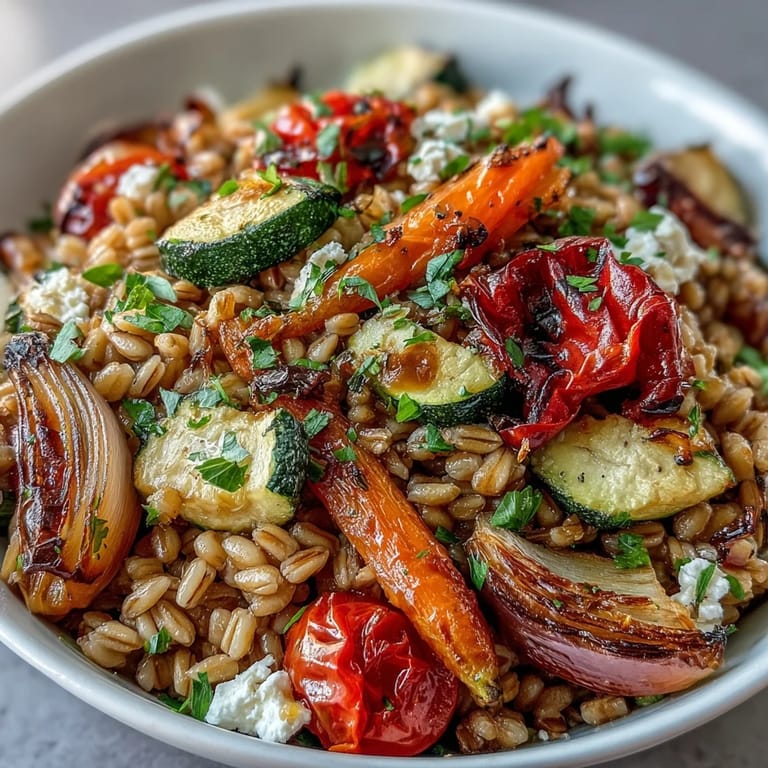
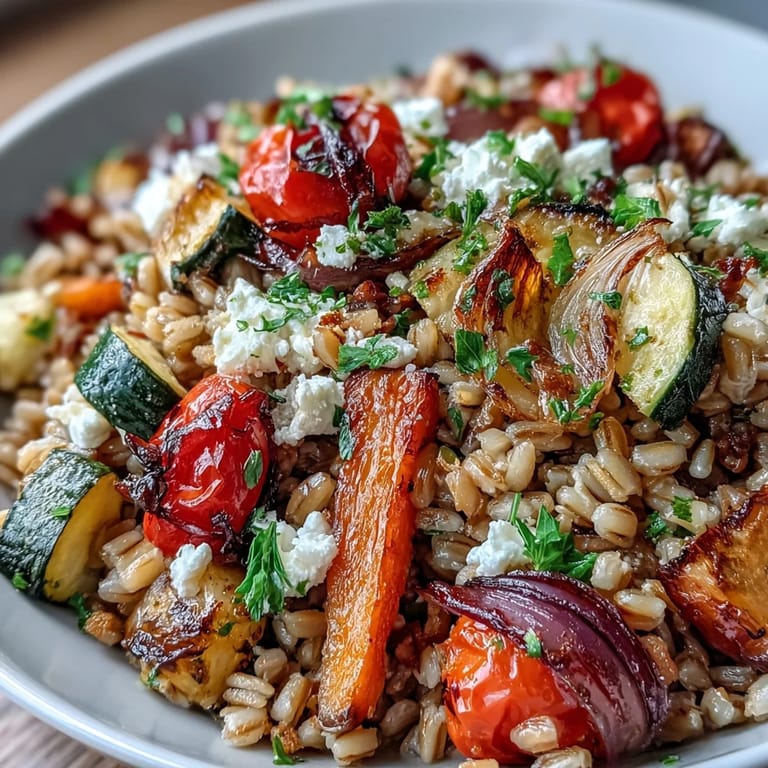
 There's something deeply satisfying about watching vegetables transform in a hot oven, their edges turning golden while the kitchen fills with the smell of caramelized sweetness. I discovered farro quite by accident one weeknight when I was looking for something between a grain and a pasta, something that would hold onto flavors without disappearing into mush. That first bowl, topped with roasted vegetables still warm from the sheet pan, felt like the kind of dish that could become a regular in my rotation—and it absolutely did.
I made this for a potluck once and someone asked if I'd hired a caterer—which still makes me laugh because I'd thrown it together in under an hour. The best part was watching people go back for seconds, especially the ones who'd never had farro before and suddenly understood why I keep a box in my pantry at all times.
Ingredients
- Farro (1 cup uncooked): This nutty whole grain stays pleasantly chewy even when fully cooked, holding dressing and roasted vegetables beautifully without getting gummy.
- Vegetable broth or water (3 cups): Use broth for deeper flavor, but water works perfectly fine if that's what you have on hand.
- Red bell pepper (1, diced): The sweetness intensifies in the oven and balances the earthier vegetables around it.
- Zucchini (1, diced): Cut into similar-sized pieces as the other vegetables so everything roasts evenly and caramelizes at the same pace.
- Red onion (1, cut into wedges): These become almost jammy when roasted and add a gentle sweetness that changes everything about the final dish.
- Carrot (1 medium, sliced): Slice at an angle if you want them to look pretty, but simple rounds work just as well and roast with the same golden edges.
- Cherry tomatoes (1 cup, halved): Add these halfway through roasting or they'll shrivel too much; you want them concentrated but still intact.
- Olive oil for roasting (2 tablespoons): This is what helps everything brown and develop flavor, so don't skip it or use too little.
- Dried thyme and oregano (1 teaspoon each): These Mediterranean herbs are the backbone of the flavor profile here.
- Extra-virgin olive oil (2 tablespoons): Save this for finishing; the quality matters more here than when roasting.
- Balsamic vinegar (1 tablespoon): A small amount adds brightness and depth without overwhelming the other flavors.
- Fresh parsley (1/4 cup, chopped): Stir this in at the end to keep its fresh, peppery quality intact.
- Feta cheese (2 tablespoons, crumbled, optional): Adds a salty, tangy note that pulls everything together, but leave it out for vegan.
Tired of Takeout? 🥡
Get 10 meals you can make faster than delivery arrives. Seriously.
One email. No spam. Unsubscribe anytime.
Instructions
- Heat your oven and prep:
- Get the oven to 425°F and line a baking sheet with parchment paper so cleanup later feels like a gift to your future self. This temperature is hot enough to caramelize the vegetables properly without drying them out.
- Dress and spread the vegetables:
- In a large bowl, toss your diced peppers, zucchini, onion, carrot, and cherry tomatoes with the 2 tablespoons olive oil and the thyme and oregano. Spread them out in a single layer on your sheet pan, making sure they have room to actually roast and brown instead of steaming on top of each other.
- Roast until caramelized:
- Put the pan in the oven for 25 to 30 minutes, stirring everything around halfway through so the pieces that were on the bottom get their turn at the heat. You'll know they're ready when the edges are dark golden and the onions have turned almost translucent and sweet.
- Cook the farro:
- While the vegetables are roasting, rinse your farro under cold water to remove any starch, then combine it in a saucepan with the vegetable broth. Bring it to a boil, then reduce the heat to low, cover it, and let it simmer gently for 25 to 30 minutes until the grains are tender but still have a little chew to them.
- Combine everything together:
- Once both components are done, transfer the warm farro to a large bowl and add the roasted vegetables straight from the pan. Drizzle with the extra-virgin olive oil and balsamic vinegar, then toss gently so the grains absorb all the flavors without breaking apart.
- Finish with freshness:
- Stir through the chopped fresh parsley and taste for seasoning, adding more salt and pepper if needed. Top with crumbled feta if you're using it, and serve warm or at room temperature.
 Pin It
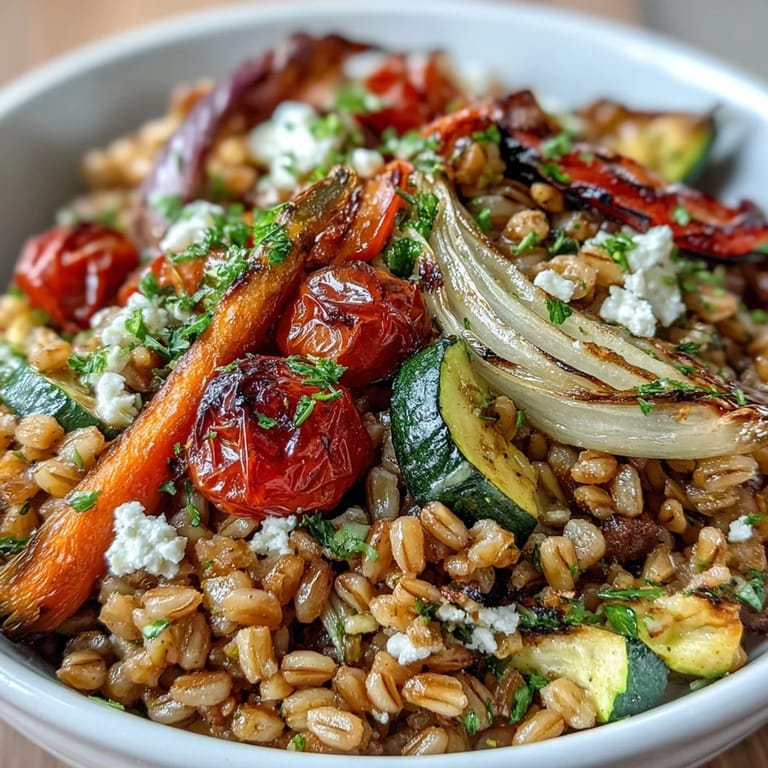
 There was one cold afternoon when I warmed up yesterday's leftover of this dish and realized it had somehow become even better overnight, the grains plump with dressing and the vegetables perfectly softened. That's when it stopped being just a recipe and became something I make constantly, always knowing I want a bowl of it in my fridge.
Swapping in Seasonal Vegetables
The beauty of this dish is that it adapts to whatever looks good at the market. In fall I swap in cubed butternut squash and add mushrooms, which develop an almost meaty texture under high heat. Summer versions get eggplant sliced into planks that get soft and golden, or fresh green beans that stay crisp even after roasting. The technique stays the same—pile everything on one pan, season generously, let the oven do the work—so you can build this around what's seasonal without thinking twice.
Making it Vegan or Dairy-Free
Leaving off the feta doesn't diminish this dish at all; the roasted vegetables and balsamic vinegar carry enough flavor on their own. If you do want that tangy element, crumbled firm tofu or store-bought vegan cheese works beautifully, though I've honestly found I don't always miss it. Some people add a squeeze of fresh lemon juice instead, which brings brightness that the vinegar alone might not give you.
Serving Suggestions and Make-Ahead Tips
This dish is genuinely good at any temperature—warm straight from the stove, room temperature after sitting for an hour, or even cold from the fridge the next day. I often make it on a Sunday and portion it into containers for lunches throughout the week, or bring it to potlucks where it seems to disappear before anything else on the table. The farro grains continue absorbing the dressing as it sits, so if you're prepping ahead, you might want to hold back some of the vinegar and oil and add it fresh when you serve.
- Store leftovers in an airtight container in the fridge for up to four days.
- If the grains seem dry when you reheat, add a splash more olive oil and a few drops of vinegar to revive them.
- This pairs perfectly with grilled chicken or fish if you want to make it heartier, or serve alongside a simple green salad.
 Pin It
 This has become one of those dishes I make without thinking, the kind that feels both effortless and impressive at the same time. Once you've made it once, you'll understand why it deserves a permanent spot in your cooking routine.
Recipe Questions & Answers
- → What does farro taste like?
Farro has a nutty, earthy flavor with a satisfyingly chewy texture similar to barley but slightly more tender. It absorbs flavors well while maintaining its structure.
- → Do I need to rinse farro before cooking?
Rinsing farro under cold water removes dust or debris and helps ensure even cooking. It's a quick step that improves the final texture of your grain.
- → Can I make this ahead of time?
Absolutely. This dish actually tastes better after the flavors meld. Store in the refrigerator for up to 4 days and serve cold, room temperature, or gently warmed.
- → What vegetables work best for roasting?
Root vegetables, bell peppers, zucchini, onions, and cherry tomatoes roast beautifully. They caramelize well and maintain texture after oven time.
- → Is this suitable for meal prep?
Yes, this reheats beautifully and holds up well throughout the week. The grain maintains its chewiness and vegetables don't become mushy after storage.