 Pin It
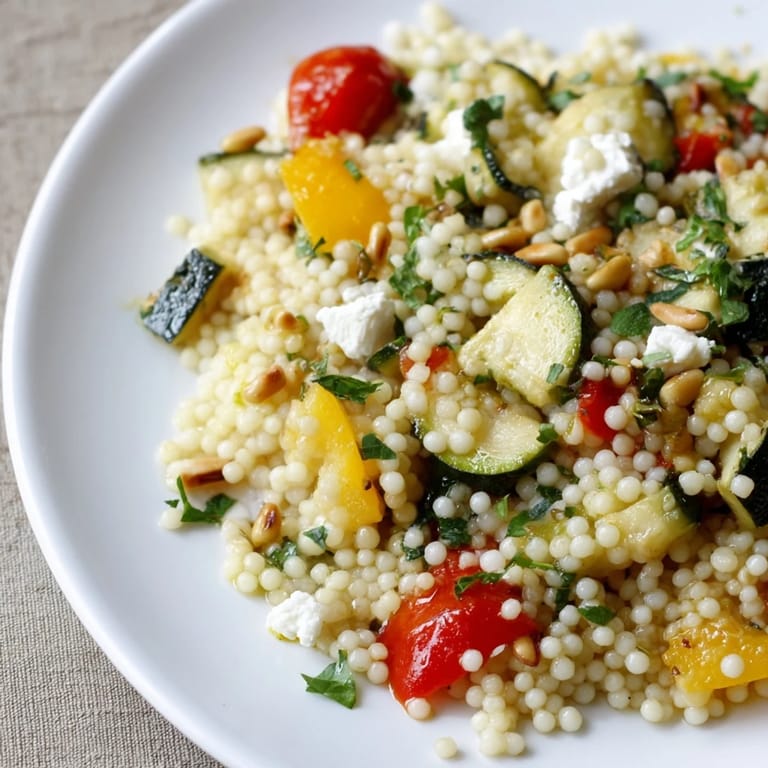
 My kitchen was a mess of cutting boards and scattered bell pepper seeds when I realized I'd bought way too many vegetables at the farmers market again. Instead of letting them wilt in the crisper, I threw them on a sheet pan, cranked the oven, and tossed together some couscous while they roasted. The smell of caramelized onions and sweet peppers filled the apartment, and by the time I drizzled on a quick lemon dressing, I had something that looked like I'd planned it all along. That happy accident became my go-to whenever I need something bright, filling, and forgiving.
I brought this to a backyard gathering once, still lukewarm in a big ceramic bowl, and watched people go back for seconds before touching the main course. Someone asked if I'd taken a cooking class, and I laughed because I'd made it in under an hour while listening to a podcast. It's one of those dishes that looks like effort but really just relies on good olive oil and a hot oven.
Ingredients
- Zucchini: Dice it into even chunks so it roasts at the same rate as the peppers, and don't worry if the edges get a little dark since that char adds sweetness.
- Red and yellow bell peppers: The mix of colors makes the dish look alive, and roasting them brings out a natural sugar that balances the tangy dressing.
- Red onion: Cut into wedges instead of rings so they hold their shape and get soft without disintegrating into mush.
- Cherry tomatoes: Halve them so they release some juice and almost melt into the couscous, adding little pockets of brightness.
- Couscous: Use a good vegetable broth instead of plain water if you have it, since couscous soaks up every bit of flavor you give it.
- Lemon juice and zest: Both are essential because the zest adds aromatic oil that the juice alone can't deliver, and together they wake up the whole dish.
- Dijon mustard: Just a teaspoon emulsifies the dressing and adds a subtle sharpness that keeps it from tasting flat.
- Fresh parsley and mint: Chop them at the last minute so they stay green and fragrant, and don't skip the mint if you have it because it makes everything taste more summery.
- Feta cheese: Crumble it on top right before serving so it stays creamy and doesn't get lost in the salad, or leave it off entirely for a lighter vegan version.
- Toasted pine nuts or almonds: A quick toast in a dry pan adds crunch and a nutty richness that makes each bite more interesting.
Tired of Takeout? 🥡
Get 10 meals you can make faster than delivery arrives. Seriously.
One email. No spam. Unsubscribe anytime.
Instructions
- Get the oven ready:
- Preheat to 425°F and line a baking sheet with parchment so nothing sticks and cleanup stays easy. This high heat is what gives the vegetables those caramelized edges.
- Toss the vegetables:
- Spread the zucchini, bell peppers, onion, and cherry tomatoes on the sheet, drizzle with olive oil, and season with salt and pepper. Make sure they're in a single layer so they roast instead of steaming.
- Roast until golden:
- Slide the pan into the oven for 20 to 25 minutes, stirring halfway through so everything cooks evenly. You'll know they're done when the edges are browned and the tomatoes start to burst.
- Prepare the couscous:
- Bring the vegetable broth to a boil, stir in the couscous, olive oil, and salt, then cover and remove from heat. Let it sit for 5 minutes, then fluff it with a fork so the grains stay light and separate.
- Whisk the dressing:
- Combine lemon juice, zest, olive oil, Dijon, minced garlic, honey, salt, and pepper in a small bowl. Whisk it until it emulsifies into a smooth, tangy dressing.
- Toss everything together:
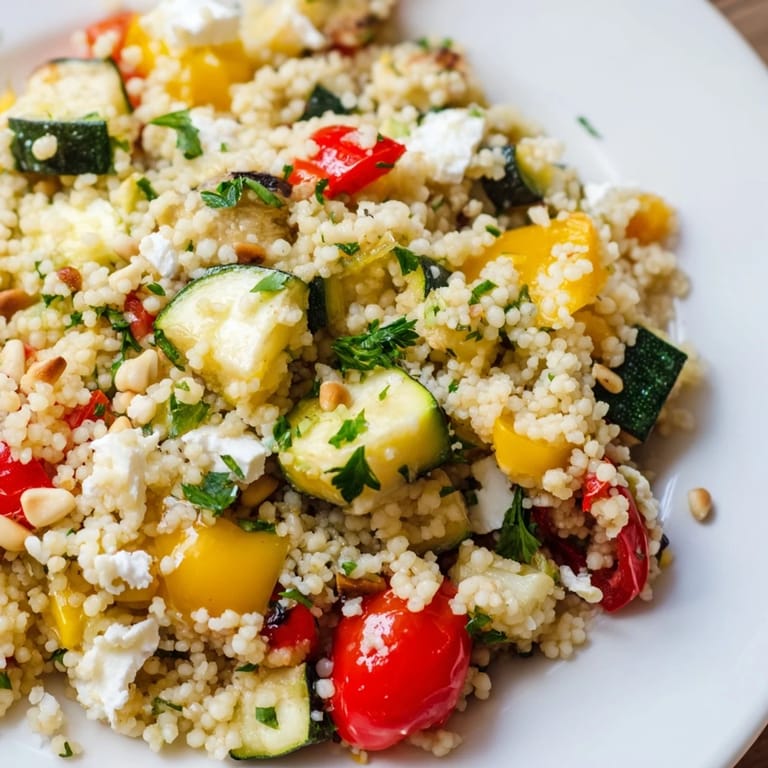
- In a large bowl, mix the fluffy couscous with the roasted vegetables, parsley, and mint, then pour the dressing over and toss gently. Finish with crumbled feta and toasted nuts just before serving so they stay crisp.
 Pin It
 The first time I served this at a family dinner, my uncle, who usually only eats meat and potatoes, quietly ate two servings and asked if I had the recipe written down. Watching him reach for more parsley-flecked couscous felt like a small victory, proof that vegetables don't need to hide under cheese or sauce to win people over. It's become the dish I make when I want to feel good about what I'm eating without sacrificing flavor or satisfaction.
Making It Your Own
This salad is forgiving enough to adapt based on what's in your fridge or what's in season. I've swapped in roasted eggplant, asparagus, or even cubed sweet potato when I had them on hand, and each version brought its own personality. If you want more protein, toss in a can of drained chickpeas or slice up some grilled halloumi, and suddenly it's hearty enough to be the main event instead of a side.
Serving Suggestions
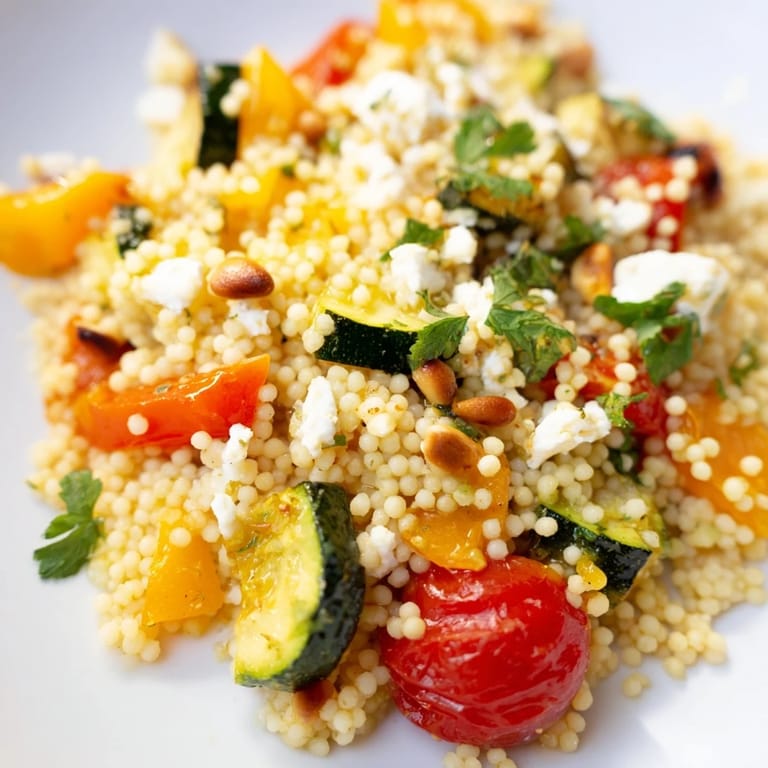
I love this salad at room temperature, which makes it ideal for picnics, lunch prep, or those nights when you don't want to heat up the kitchen again. It pairs beautifully with grilled chicken, lamb skewers, or a simple piece of roasted fish, but it's also satisfying enough to stand alone with some crusty bread and a glass of cold white wine. Leftovers keep well for a day or two in the fridge, though the herbs lose a bit of their brightness, so I sometimes stir in a handful of fresh parsley before reheating.
Storage and Reheating
If you're making this ahead, store the couscous and vegetables separate from the dressing and toss everything together just before serving so the texture stays fresh. The roasted vegetables actually taste even better the next day once their flavors have had time to meld. You can eat it cold straight from the fridge, or warm it gently in a skillet with a splash of broth to bring it back to life.
- Store leftovers in an airtight container in the fridge for up to 2 days.
- Add the feta and nuts right before eating so they stay fresh and crunchy.
- If the salad seems dry after sitting, drizzle a little extra lemon juice and olive oil to refresh it.
 Pin It
 This salad has earned its spot in my weekly rotation because it's vibrant, flexible, and never feels like a compromise. I hope it becomes one of those recipes you reach for when you want something that tastes like sunshine and feels like taking care of yourself.
Recipe Questions & Answers
- → Can I prepare this salad ahead of time?
Yes, you can prepare components separately. Roast vegetables and cook couscous in advance, storing them in separate containers. Make the dressing and keep it in a jar. Combine everything just before serving for the best texture, though the salad keeps well refrigerated for up to 2 days.
- → How do I make this vegan?
Simply omit the feta cheese or replace it with a plant-based alternative. The salad is naturally vegetarian, and using vegetable broth makes it entirely vegan-friendly. All other ingredients remain the same.
- → What vegetables can I substitute?
Feel free to swap vegetables based on what's in season or your preferences. Eggplant, broccoli, cauliflower, asparagus, and sweet potato all roast beautifully. Adjust roasting time as needed depending on vegetable size and density.
- → How do I add protein to this salad?
Consider adding roasted chickpeas, grilled chicken breast, pan-seared halloumi, or white beans. These additions complement the Mediterranean flavors and make the salad more substantial as a main course.
- → Can I use pearl couscous instead of regular couscous?
Yes, pearl couscous works well as a substitute. It has a chewier texture and may require slightly more liquid. Follow package instructions for the liquid-to-couscous ratio, as pearl couscous typically needs a 1:1.5 ratio compared to regular couscous.
- → What's the best way to store leftovers?
Store the salad in an airtight container in the refrigerator for up to 2 days. Keep the dressing separate if possible to prevent sogginess. Before serving leftovers, add a fresh squeeze of lemon juice and toss gently to refresh the flavors.