 Pin It
 There's something about arranging food on a board that feels like staging a performance. I discovered this years ago when a dinner party guest arrived early and caught me frantically laying out cheeses, and instead of hiding, I leaned into it—creating layers and cascades until the whole thing looked like velvet curtains frozen mid-fall. That evening, people didn't just eat; they gathered around and watched, mesmerized by how the ingredients seemed to tell a story together.
I made this board for my sister's engagement party, and halfway through the evening, a stranger asked if I'd studied architecture. I hadn't, but I'd learned something that night: presentation isn't about perfection, it's about intention. The way figs nestled against blue cheese, the pomegranate seeds catching the light like stage lights themselves—it all mattered more than I expected.
Ingredients
- Brie, 150 g sliced into wedges: This soft cheese is your canvas; it spreads beautifully when it hits room temperature and anchors everything around it.
- Aged Cheddar, 150 g cut into sticks: The sharp bite balances sweeter elements and holds its shape as guests pick at it.
- Blue Cheese, 120 g broken into chunks: A little goes a long way; its boldness makes people reach for fruit or crackers immediately after tasting it.
- Prosciutto, 100 g loosely draped: Fold it casually rather than laying it flat; the loose folds create visual movement that mirrors actual theater curtains.
- Soppressata, 100 g folded: Stack these folds to create height variation across your board.
- Red Grapes, 1 cup on the stem: Keep them clustered; guests love plucking them straight from the stem without thinking.
- Fresh Figs, 1 cup halved: The slight moisture and delicate interior make them look jewel-like; source them when they're in season for the best flavor.
- Strawberries, 1 cup halved: Their bright red ties the whole color story together.
- Pomegranate seeds, 1 cup: These jewel-like arils add color and a burst of tartness that cuts through rich cheese.
- Baguette, 1 sliced: Slice at an angle for an elegant presentation that catches light differently than straight cuts.
- Seeded Crackers, 150 g: Choose sturdy ones that won't crumble under cheese; the seeds add texture and visual interest.
- Fig Jam, 1/2 cup: Sweet and complex, it's the bridge between cheese and fruit.
- Honey, 1/4 cup: Drizzle it right before guests arrive so it glistens; it pairs especially well with blue cheese.
- Marcona Almonds, 1/2 cup: Their buttery texture differs from regular almonds and feels more luxurious.
- Olives, 1/2 cup mixed and pitted: Keep them in a small bowl so people don't have to search.
- Fresh herbs, rosemary and thyme: Tuck whole sprigs between ingredients for aroma and color; they're as much for smelling as for seeing.
Tired of Takeout? 🥡
Get 10 meals you can make faster than delivery arrives. Seriously.
One email. No spam. Unsubscribe anytime.
Instructions
- Set the stage:
- Place your wooden board near the table's edge, positioning it so people naturally gather around it. The dramatic effect comes from the board's placement as much as what goes on it.
- Begin with cheese architecture:
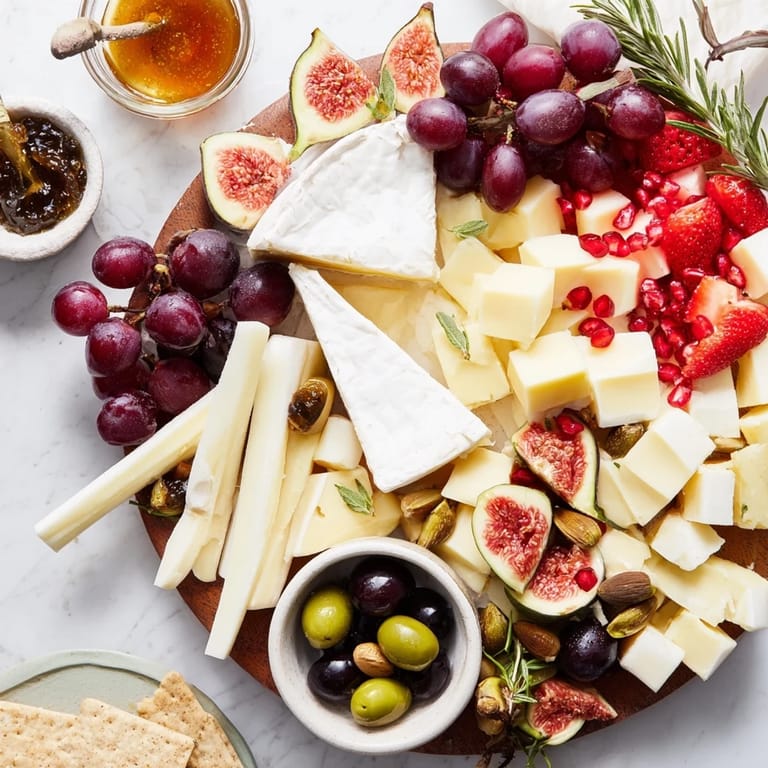
- Arrange your three cheeses in different areas, leaving space between them. Let some wedges and sticks spill slightly over the board's edge—this is where the magic happens, where food becomes theater.
- Layer the cured meats:
- Fold prosciutto and soppressata loosely, creating folds that look like fabric rather than flat slices. Drape them so they flow toward the edge, creating movement and dimension.
- Scatter the fruit strategically:
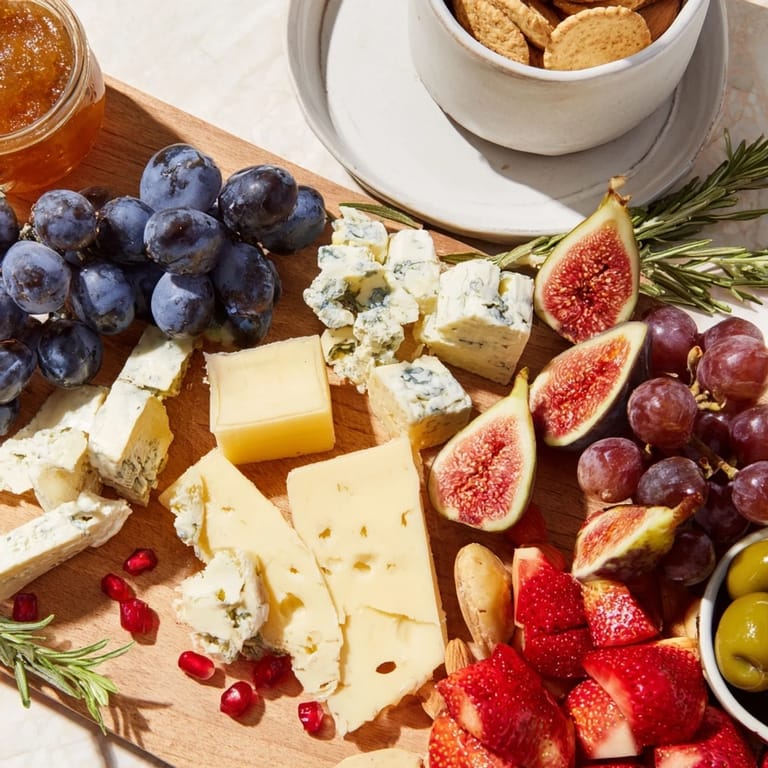
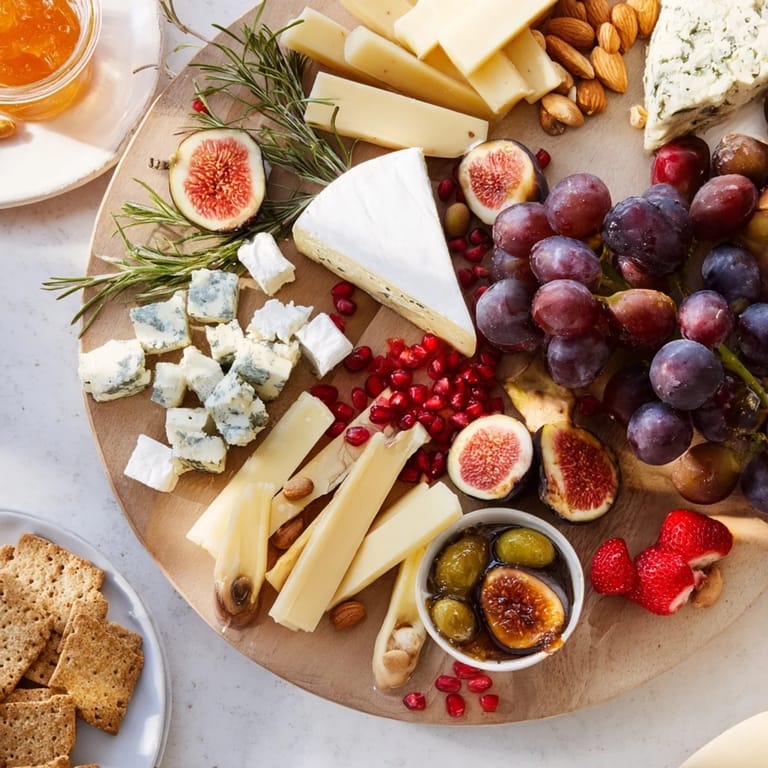
- Tuck grapes in clusters, halved figs with their cut sides facing up to show that deep color, strawberries, and pomegranate seeds. Let them trail and cascade, filling gaps while creating visual flow.
- Position bread and crackers:
- Fan baguette slices and arrange crackers so some rest on the board and others slightly overhang, creating a graduated effect. This gives guests easy access and adds texture variation.
- Nestle the accompaniments:
- Place small bowls of fig jam, honey, olives, and almonds directly on the board, treating them as part of the composition rather than afterthoughts. Position them where hands will naturally reach.
- Finish with living garnish:
- Tuck fresh rosemary and thyme sprigs throughout, tucking them between other ingredients so they seem to emerge organically. Step back and look for empty spaces, filling them with color and intention.
- Present with confidence:
- Bring the board to your guests immediately while everything is at its peak; the energy of people gathering around it is part of the experience itself.
 Pin It
 My neighbor watched me build one of these boards and said it was like watching someone compose music. That's when I realized the board isn't really about feeding people—it's about creating a moment where everyone slows down together.
The Psychology of a Beautiful Board
Food arranged with intention changes how people eat it. They linger longer, try combinations they wouldn't normally choose, and actually taste what's in front of them. The theatrical cascade encourages exploration instead of just grabbing and going.
Adapting This Board to Your Moment
This template works year-round but transforms with seasons. In summer, load it with berries and stone fruit. In autumn, add roasted grapes and dried figs. In winter, lean into nuts and preserved elements. The structure stays the same; only the supporting cast changes.
Building Your Own Theater
The board is as much about your space and your guests as it is about the ingredients themselves. What makes yours unique is how you interpret the dramatic element, which elements you emphasize, and the story the colors tell together.
- Start with a color palette in mind, then choose ingredients that support it.
- Odd numbers and asymmetry always feel more intentional than perfect symmetry.
- Remember that height variation is what makes people stop and stare.
 Pin It
 Every time I build one of these boards, I'm reminded that hospitality is theater, and the best meals happen when people feel like they're part of something bigger than hunger. Make this your own.
Recipe Questions & Answers
- → What cheeses work best for this grazing board?
Brie, aged Cheddar, and Blue Cheese provide a balanced mix of creamy, sharp, and tangy flavors, creating depth and variety.
- → Can the charcuterie be omitted?
Yes, the board works beautifully as a vegetarian option by removing meats and focusing on cheeses and fresh produce.
- → How should the fruits be arranged?
Place fresh figs, grapes, strawberries, and pomegranate seeds so some spill over the edge for a natural, flowing effect.
- → What breads and crackers complement this spread?
Sliced baguette and seeded crackers add crunch and mild flavors that balance the richness of cheeses and charcuterie.
- → Are there any garnish suggestions?
Fresh herbs like rosemary and thyme bring color and aroma, enhancing the visual appeal and subtle flavor notes.
- → How long does preparation take?
The board can be assembled in about 20 minutes, making it quick to prepare for gatherings.