 Pin It
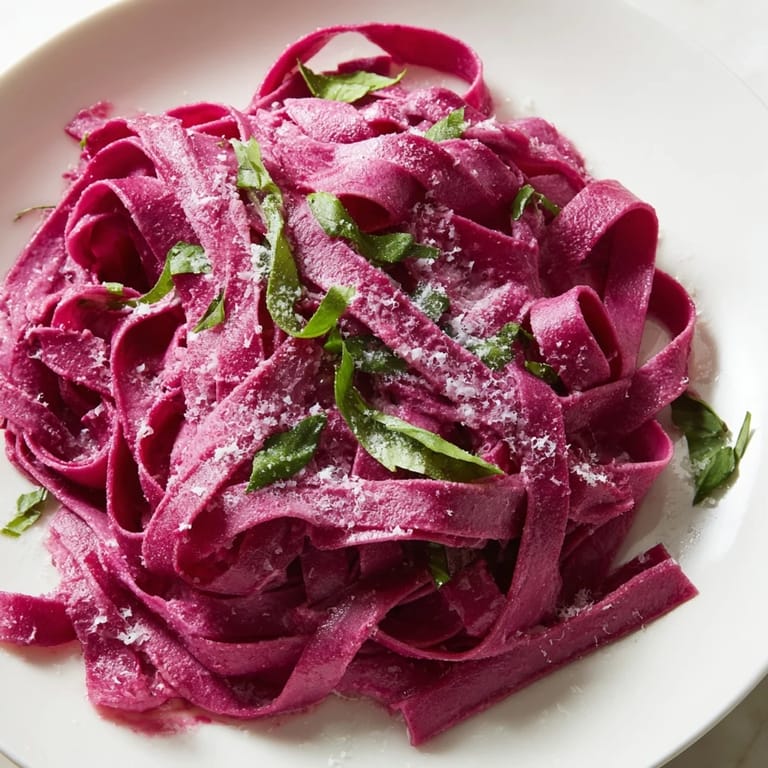
 My kitchen smelled like roasted earth the first time I decided to turn a beet into pasta dough, mainly because I'd forgotten to wrap it properly and let the oven fill with that deep, almost purple warmth. What started as an ambitious whim—wanting to make something that looked as beautiful as it tasted—became the dish I now make whenever I need to remind myself that the best meals come from playing with what's in front of you. The beet puree swirled into the flour like watercolor, and somehow, the dough knew exactly what to do.
I made this for a friend who'd been going through something rough, and watching her face light up when the magenta noodles hit her plate felt like small magic. She asked if I'd learned it from some fancy cooking school, and I had to laugh—no, just a Sunday afternoon when I decided beets belonged in dough. That's the kind of meal that becomes a story people retell.
Ingredients
- 1 medium beet (about 180 g), trimmed and scrubbed: Choose one that feels heavy for its size, a sign it's packed with juice and flavor that'll give your dough its character.
- 1 tablespoon olive oil for roasting: This small amount keeps the beet from drying out and helps coax out its natural sweetness as it cooks.
- Pinch of salt for roasting: Don't skip this—salt opens up flavors that might otherwise stay hidden.
- 2 cups (250 g) all-purpose flour, plus extra for dusting: Keep extra nearby; humidity in your kitchen will change how much you actually need, so trust your hands more than the measurement.
- 2 large eggs: These bind everything together and give the dough a tender, silky texture that fresh pasta should have.
- 1/2 teaspoon salt for dough: This goes into the dough itself, not just the surface—it seasons every strand you'll eat.
- 1/4 cup (60 g) roasted beet puree: This is the heart of the dish; if it's wetter or drier than expected, adjust your flour slightly so the dough stays workable.
- 2 tablespoons unsalted butter or olive oil for serving: Butter brings a richness that whispers under the beet's earthiness, while oil keeps things light and fresh.
- Fresh herbs (basil, parsley), chopped: Add these at the very last second so they stay bright and fragrant.
- Grated Parmesan or pecorino cheese: A sharp edge of umami that makes every bite feel complete.
Tired of Takeout? 🥡
Get 10 meals you can make faster than delivery arrives. Seriously.
One email. No spam. Unsubscribe anytime.
Instructions
- Roast the beet until it surrenders:
- Wrap your trimmed beet in foil with a drizzle of oil and salt, then slide it into a 400°F oven for 45 to 60 minutes until a fork slides through like butter. The kitchen will smell like caramelized earth, and you'll know it's ready when the skin comes off almost without asking.
- Blend into silky puree:
- Once it's cool enough to handle, peel away the papery skin and push the beet through a food processor until completely smooth. Measure out 1/4 cup for your dough and keep any extra—it's liquid gold for other dishes.
- Build your dough foundation:
- Mound your flour on a clean counter and press a well into the center with your thumb, like you're creating a tiny landscape. Pour in the eggs, salt, and beet puree, then use a fork to gently pull flour from the edges into the wet center until it's shaggy and rough.
- Knead until the dough gets confident:
- Use the heel of your hand to push the dough away, fold it back over itself, turn it, and repeat for 8 to 10 minutes until it's smooth, elastic, and no longer sticky. This is meditation; let your hands learn what the dough needs rather than watching the clock.
- Let it rest and relax:
- Wrap the dough in plastic and leave it at room temperature for 30 minutes—this makes rolling so much easier and the noodles more tender when cooked. Walk away and do something else; the dough knows what to do.
- Roll and shape with intention:
- Divide into 4 pieces and roll each as thin as you want—about 1 to 2 millimeters gives you that delicate, silky bite. Cut into tagliatelle, fettuccine, or whatever shape makes you happy.
- Cook until al dente hits just right:
- Fresh pasta cooks fast, usually 2 to 3 minutes in salted boiling water—taste a strand and stop the moment it has a tiny bite in the center. Drain and toss immediately with butter or oil, herbs, and cheese while the noodles are still warm.
 Pin It
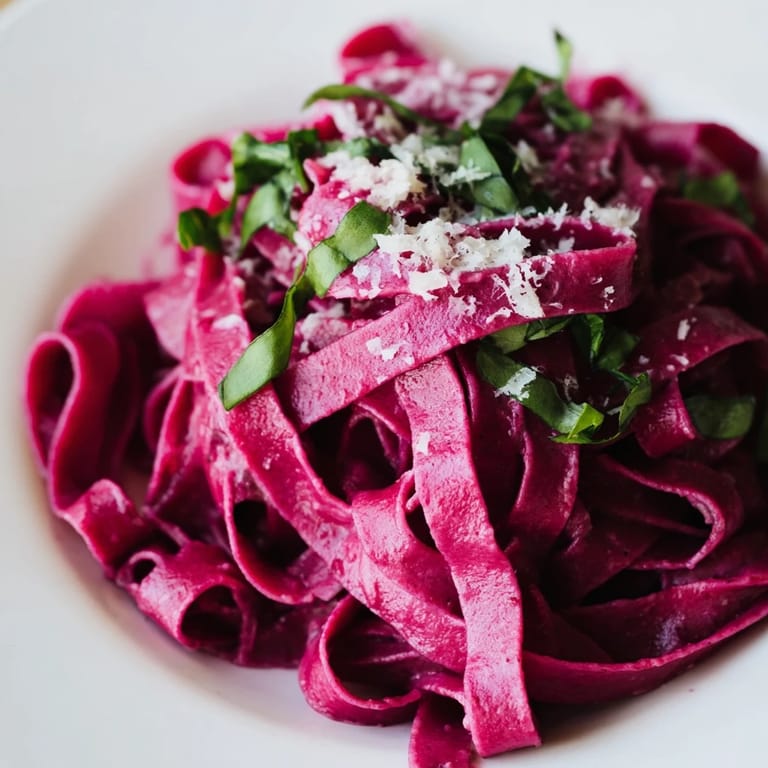
 There's a moment when you first cut into the rolled sheet and see those vivid magenta noodles that makes you feel like a small artist. That's when this stops being just a recipe and becomes something you made with intention.
Why Beet Pasta Becomes Unforgettable
The beet doesn't shout—it whispers. Its subtle earthiness lets the pasta's tender structure shine through, and the natural color means you're never faking it with food dyes or extra salt. Every time someone sees this on a plate, they want to know the secret, and the secret is just patience and a vegetable that's been roasted until it's ready to give everything it has.
Making It Your Own
This dough is a canvas; I've made it with beets roasted plain, and once with a whisper of cumin that surprised everyone. You can serve it simply with brown butter and sage, or toss it with a light lemon cream if you want something richer. The beauty is that once you understand how the dough feels and moves, you can trust yourself to play with it.
Small Moments That Make It Matter
Making pasta by hand slows everything down in the best way—there's no rush, no machine noise, just you and the dough learning each other. Years ago, my grandmother watched me knead this for the first time and said, 'You're listening to it,' and I didn't understand until my hands did.
- Cook these noodles just moments before serving so they hold their delicate texture and the beet flavor stays vibrant.
- If you have leftover puree, swirl it into cream cheese or use it to color a simple risotto another day.
- Fresh pasta freezes beautifully—lay the cut noodles on a sheet to dry for an hour, then bag them for later.
 Pin It
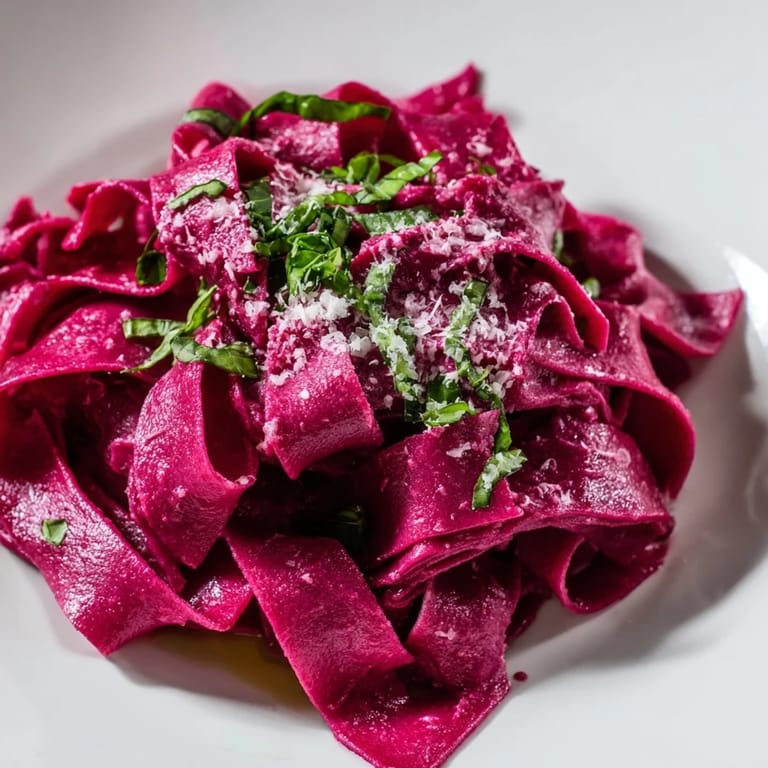
 This pasta is proof that beautiful food doesn't have to be complicated—just real, made with attention, and served to people you care about. Everything else is just noodles and butter.
Recipe Questions & Answers
- → How do I prevent the beet puree from making the dough too wet?
Start with the measured 1/4 cup beet puree and adjust flour gradually during kneading. If the dough becomes sticky, add flour one tablespoon at a time until you achieve a smooth, elastic consistency that doesn't stick to your hands.
- → Can I make this pasta ahead of time?
Yes, fresh pasta dough can be wrapped in plastic wrap and refrigerated for up to 24 hours. You can also freeze cut noodles on a baking sheet, then store in freezer bags for up to two months. Cook frozen noodles directly in boiling water, adding 1-2 minutes to cooking time.
- → What's the best way to roll the dough without a pasta machine?
Use a rolling pin on a lightly floured surface, working from the center outward. Aim for about 1-2 mm thickness. Let the dough rest between rolling sessions if it becomes elastic and difficult to work with.
- → How can I make this vegan?
Replace the two eggs with 1/4 cup water and 1 tablespoon olive oil. Mix these wet ingredients with the beet puree before incorporating into the flour. The resulting texture will be slightly different but still delicious.
- → Why is my beet flavor subtle?
The 1/4 cup puree provides beautiful color but mild flavor. For stronger beet taste, use up to 1/3 cup puree while adjusting flour amounts slightly. Start with extra puree gradually to maintain proper dough consistency.
- → What sauces pair best with beet noodles?
Brown butter and sage, light lemon cream, or simple olive oil with fresh herbs complement the earthy sweetness without overpowering it. Avoid heavy tomato sauces that may clash with the beet flavor.