 Pin It
 I used to think kibbeh was one of those dishes you only ordered at restaurants, something too intricate to attempt at home. Then my neighbor Layla invited me over one Saturday and handed me a bowl of cold water, telling me to keep my hands wet. We spent the afternoon shaping torpedoes of spiced meat and bulgur, laughing every time one split open. By the end, I had a plateful of golden, crispy kibbeh and a new confidence in my kitchen.
The first time I made kibbeh for a dinner party, I panicked halfway through because my dough kept cracking. I added a tablespoon of cold water, kneaded it again, and everything smoothed out. My guests had no idea I'd been troubleshooting in the kitchen minutes before serving. They just kept reaching for more, dipping each one into tangy yogurt and asking for the recipe.
Ingredients
- Fine bulgur wheat: This is the backbone of the dough, so make sure its labeled fine or extra fine. Soaking it briefly softens the grains just enough to bind with the meat without turning mushy.
- Lean ground beef or lamb: I prefer lamb for its richer flavor, but beef works beautifully too. The leaner the meat, the better the dough holds together.
- Onion: Finely chopped onion adds moisture and sweetness to both the dough and the filling. I sometimes grate it for an even smoother texture.
- Ground allspice: This warm spice is the signature note in kibbeh. Dont skip it, it transforms the whole dish.
- Ground cinnamon: Just a hint brings depth without making it taste like dessert.
- Pine nuts: Toasting them in the filling adds a buttery crunch that makes every bite feel luxurious.
- Olive oil: I use it for the filling and for brushing if Im baking instead of frying. It keeps everything moist and golden.
- Vegetable oil for frying: If youre going the fried route, use enough oil to submerge the kibbeh halfway. The oil should shimmer but not smoke.
- Cold water: This is your secret weapon. Add it gradually to the dough if it feels too dry or crumbly.
Tired of Takeout? 🥡
Get 10 meals you can make faster than delivery arrives. Seriously.
One email. No spam. Unsubscribe anytime.
Instructions
- Soften the bulgur:
- Rinse the bulgur under cold water in a fine mesh strainer, then let it sit in a bowl for about 10 minutes. It should absorb just enough moisture to become pliable without getting soggy.
- Make the kibbeh dough:
- In a large bowl, combine the softened bulgur, ground meat, chopped onion, salt, allspice, cinnamon, and black pepper. Knead it with your hands, adding cold water a tablespoon at a time, until the mixture feels smooth and cohesive like Play Doh. Cover and chill it while you make the filling.
- Prepare the filling:
- Heat olive oil in a skillet over medium heat and cook the onions until theyre soft and translucent, about 3 minutes. Add the ground meat, breaking it up as it browns, then stir in the pine nuts and spices. Cook until the nuts turn golden and fragrant, then remove from heat and let it cool slightly.
- Shape the kibbeh:
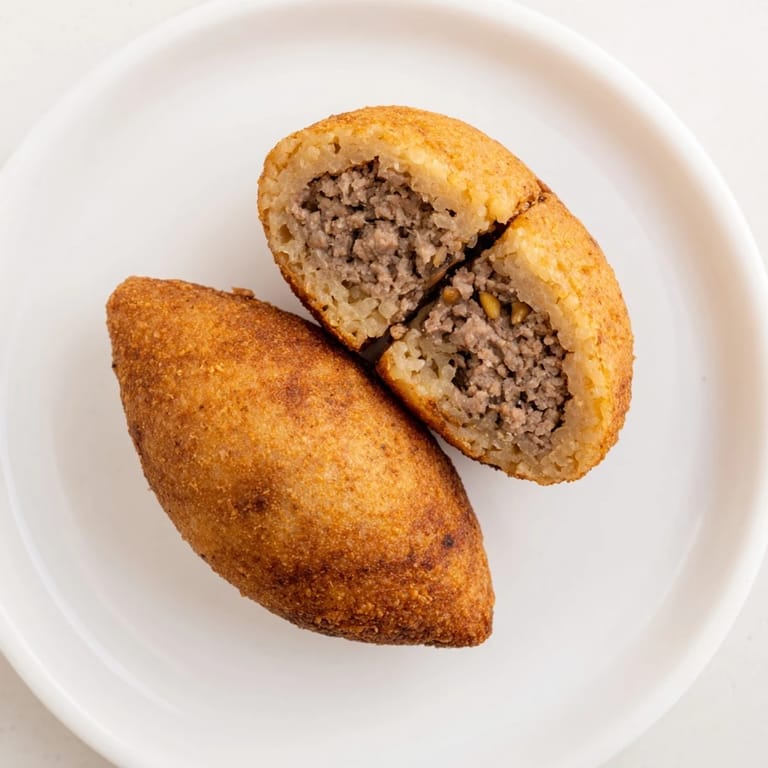
- Wet your hands with cold water and take a golf ball sized piece of dough. Flatten it in your palm into a thin oval, almost like a small pita. Spoon a teaspoon or two of filling into the center, then pinch the edges together to seal it into a torpedo or football shape. If it cracks, just pinch it back together and keep going.
- Fry or bake:
- For frying, heat vegetable oil to 180 degrees Celsius in a deep pan and fry the kibbeh in batches until deep golden brown, about 4 to 5 minutes. Drain on paper towels. For baking, preheat your oven to 200 degrees Celsius, brush the kibbeh with olive oil, and bake for 25 to 30 minutes, flipping halfway through, until crisp and golden.
 Pin It
 One evening, I served kibbeh alongside a big bowl of cucumber yogurt and a simple tomato salad. My brother in law, who usually just nods politely at my cooking experiments, asked if he could take the leftovers home. That was the moment I knew this recipe had earned its place in my regular rotation.
Serving Suggestions
Kibbeh is traditionally served with thick yogurt or tahini sauce on the side, and I love pairing it with a bright, lemony salad to cut through the richness. Sometimes I serve it as a mezze platter with hummus, tabbouleh, and warm pita. Other times, its the main event with a side of roasted vegetables and rice.
Make Ahead and Storage
You can shape the kibbeh and freeze them uncooked on a baking sheet, then transfer them to a freezer bag once theyre solid. They keep for up to three months and can be fried or baked straight from frozen, just add a couple of extra minutes to the cooking time. Cooked kibbeh also reheats beautifully in the oven at 180 degrees Celsius for about 10 minutes.
Variations and Substitutions
If you want to make a vegetarian version, swap the meat filling for cooked lentils mixed with sauteed mushrooms, onions, and the same spices. Ive also seen people use walnuts instead of pine nuts when theyre hard to find or too pricey. For a lighter option, baking instead of frying still gives you that crispy exterior with less oil.
- Try adding a pinch of sumac to the filling for a tangy twist.
- You can shape them into small balls instead of torpedoes if you prefer bite sized appetizers.
- If bulgur isnt available, some cooks use fine semolina, though the texture will be slightly different.
 Pin It
 Once you get the rhythm of shaping these, youll find yourself making kibbeh on repeat. Theres something deeply satisfying about pulling a tray of golden, crackling kibbeh out of the oven and watching them disappear within minutes.
Recipe Questions & Answers
- → What is kibbeh made of?
Kibbeh combines bulgur wheat with ground beef or lamb, flavored with onions, allspice, cinnamon, and black pepper.
- → How can kibbeh be cooked?
Kibbeh is traditionally fried for a crispy exterior, but it can also be baked for a lighter option with a golden finish.
- → What are common fillings in kibbeh?
The filling typically consists of cooked ground meat, pine nuts, onions, olive oil, and spices like allspice and cinnamon.
- → Can kibbeh be prepared vegetarian?
Yes, a vegetarian version uses lentils and sautéed mushrooms as a flavorful alternative to meat fillings.
- → How should kibbeh be served?
It is often accompanied by yogurt or tahini sauce and fresh salad to complement its rich and spiced flavors.
- → What tools are recommended to prepare kibbeh?
Mixing bowls, skillet, deep-frying pan or oven, slotted spoon or spatula, and a baking sheet are commonly used.