 Pin It
 There's something about the smell of garlic hitting hot oil that makes you stop whatever you're doing. I discovered this dish on a Tuesday night when I had nothing in the pantry except noodles, chili flakes, and the kind of determination that comes from being genuinely hungry. The sizzle when the oil hit the spice mixture was so loud my neighbor actually knocked to make sure nothing was on fire. Twenty minutes later, I was eating something so good I immediately texted my friend the photo with zero context.
I made this for my roommate at 11 PM on a night when we were both too tired to order food but somehow still awake enough to eat. She watched me toast those sesame seeds and said the kitchen smelled like a restaurant she'd been wanting to visit. By the time the noodles were coated and steaming, we were both sitting at the counter with chopsticks, fighting over the last strands before they cooled down.
Ingredients
- Wheat noodles (200 g): Fresh or dried works, but dried noodles have a better chew that stands up to the oil without turning mushy.
- Garlic (4 cloves, finely minced): Don't skip the mincing step—bigger pieces won't infuse properly into the oil and you'll end up with crunchy surprises.
- Scallions (2, white and green parts separated): The white parts go into the hot oil for depth, the green parts stay raw as a garnish to keep things bright.
- Toasted sesame seeds (1 tablespoon): Toasting them yourself makes a real difference in the nutty flavor, but store-bought toasted seeds work fine in a pinch.
- Chili flakes (2½ tablespoons): Sichuan or Korean varieties have different heat profiles—start with less if you're sensitive and add more next time once you know your tolerance.
- Sichuan peppercorns (½ teaspoon, optional): These create that distinctive numbing tingle that makes the dish feel sophisticated, but they're truly optional if you can't find them.
- Ground white pepper (¼ teaspoon): White pepper has a different flavor than black and adds a subtle complexity you might not notice but would definitely miss if it vanished.
- Sugar (½ teaspoon) and salt (½ teaspoon): These balance the heat and make the flavors pop rather than just scream at you.
- Neutral oil (3 tablespoons): The temperature of this oil is what makes the whole dish work, so don't use olive oil and don't skip the shimmering step.
- Light soy sauce (1½ tablespoons): Light soy sauce is less intense than dark, which keeps the noodles from getting muddy-tasting.
- Chinese black vinegar (1 tablespoon): This is worth hunting for—it's milder and more complex than regular vinegar and tastes like it belongs in this dish.
- Dark soy sauce (1 teaspoon, optional): Just for color depth if you want the noodles to look slightly darker and more luxurious.
- Toasted sesame oil (½ teaspoon): A small drizzle adds a richness that rounds out the whole thing, but use it sparingly or it becomes all you can taste.
Tired of Takeout? 🥡
Get 10 meals you can make faster than delivery arrives. Seriously.
One email. No spam. Unsubscribe anytime.
Instructions
- Cook your noodles until just tender:
- Boil them according to the package, but taste them a minute before the time says—they should have a slight chew, not soft. Drain but keep 2 tablespoons of that starchy water because it helps the sauce coat the noodles like magic.
- Build your flavor base in a heatproof bowl:
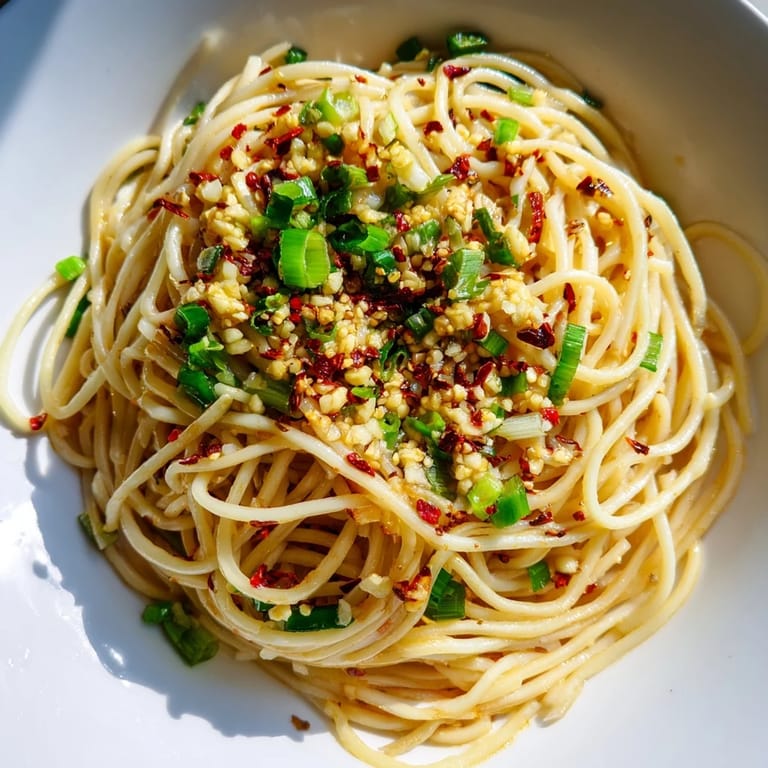
- Mix the minced garlic, white scallion parts, chili flakes, Sichuan peppercorns if you're using them, white pepper, sugar, salt, and sesame seeds. This is your flavor bomb waiting to happen.
- Heat the oil until it's shimmering and ready:
- You want it hot enough that a strand of garlic sizzles immediately when it hits, but not so hot it smokes—that's the line between fragrant and burnt.
- Pour the hot oil over your spice mixture slowly and carefully:
- It should sound like a sizzle and smell absolutely incredible within seconds. Stir it together and let it cool for just a minute while those flavors wake up.
- Make your sauce in another bowl:
- Whisk light soy sauce, black vinegar, dark soy sauce if you're using it, and sesame oil together with your reserved noodle water. The starchy water helps everything cling to the noodles instead of pooling at the bottom.
- Bring everything together:
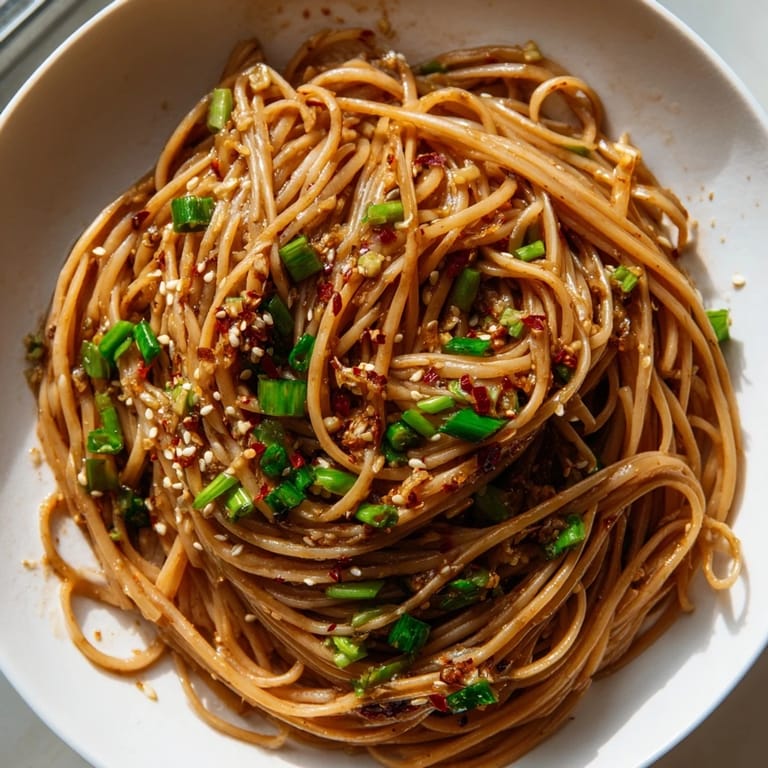
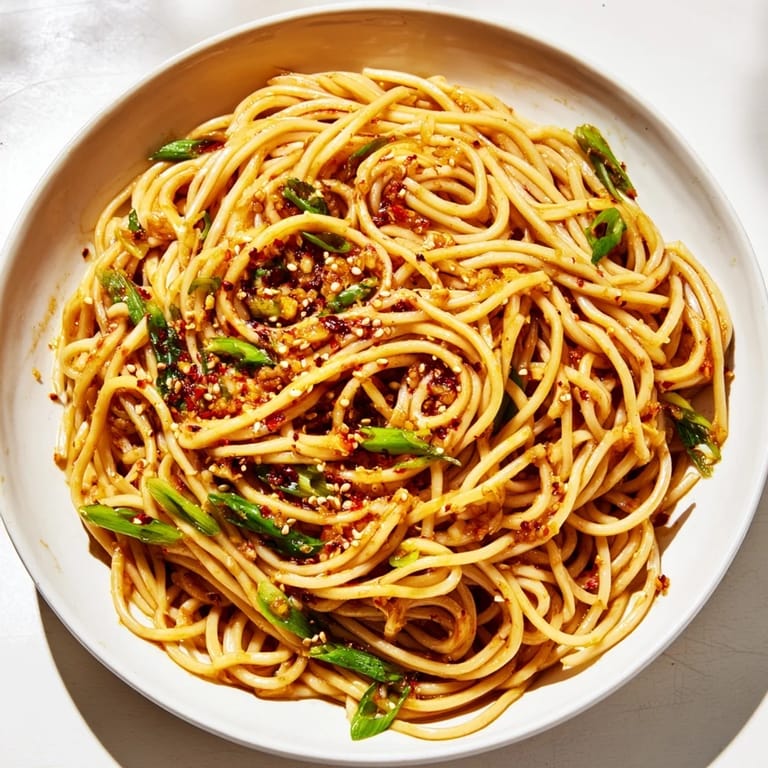
- Put your drained noodles in a large bowl, pour the sauce over them, then add that gorgeous infused chili oil. Toss everything until every strand is coated and glossy and glistening under the light.
- Finish with the green parts of scallions and extra sesame seeds:
- These stay raw so they stay bright and slightly fresh against the deep, fiery flavors underneath.
- Eat it while it's still warm:
- Give it one more good toss just before you eat because the oil settles and you want to redistribute all that flavor every bite.
 Pin It
 I've learned that simple dishes are where you really see if you know what you're doing. This one taught me that technique matters more than complexity, and that sometimes the best meals are the ones that come together in the time it takes to boil water.
The Heat Conversation
People have very different opinions about spice, and that's fine. I've made this dish so many times now for different people, and the most common request is either less chili or more sesame oil to balance the heat with richness. The Sichuan peppercorns create a different kind of fire than regular chili flakes—it's more of a numbing tingle that builds on your tongue, which some people find exciting and others find confusing. Start conservative with the chili flakes and taste as you go, because you can always add more heat but you can't take it back.
Why This Works As a Quick Meal
There's something really honest about a dish that takes 20 minutes from craving to plate. You're not waiting for something to braise or ferment, you're just coaxing flavors out of good ingredients and letting them sing. The speed is part of the appeal—it means you can make it on a Tuesday night without planning ahead, which is when you usually want noodles the most.
Making It Your Own
Once you understand how this works, you can pivot it in a hundred directions. I've added everything from crispy tofu to leftover rotisserie chicken, sautéed bok choy, or even a soft egg on top. The oil and sauce are sturdy enough to carry whatever else you want to throw in. Some nights I make it exactly as written, other nights I'm using it as a template and letting the refrigerator guide me.
- A handful of fresh cilantro at the end brings a bright herbaceousness that plays nicely with the heat.
- If you find good chili crisp in a jar, you can use that instead of making your own oil—it's less dramatic but also less fussy.
- Cold sesame noodles made with this same oil-and-sauce base are incredible for lunch the next day if you somehow have leftovers.
 Pin It
 This dish stopped being just a recipe the night my friend asked me to teach her how to make it. We stood at the stove together listening to that oil sizzle, and I realized that some of the best cooking happens when you're standing next to someone who's as hungry as you are.
Recipe Questions & Answers
- → What noodles work best for this dish?
Wheat noodles like Chinese wheat noodles or linguine hold up well and absorb the chili oil flavor nicely.
- → Can I adjust the heat level?
Yes, simply reduce or increase chili flakes to match preferred spiciness without altering the core flavor.
- → What is the purpose of the neutral oil?
Neutral oil is heated to gently release the aromas of garlic, chili flakes, and spices without adding competing flavors.
- → How to store leftovers?
Store in an airtight container in the refrigerator and reheat gently while adding a splash of water or oil to refresh the noodles.
- → Can this dish be made vegan?
Yes, all ingredients are plant-based, making it suitable for vegan diets as long as soy sauce used is vegan.