 Pin It
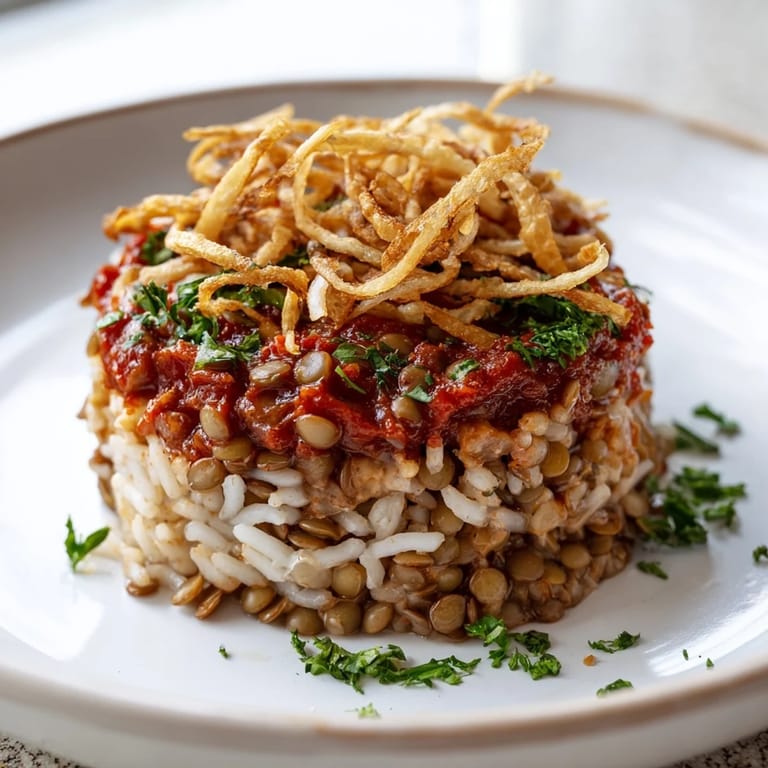
 The first time I tasted koshari was from a vendor's cart in a Cairo market, and I was instantly hooked by the sheer audacity of it—rice and lentils and pasta all in one bowl, layered like edible architecture. When I finally made it at home years later, I realized this wasn't some complicated dish but rather a celebration of simplicity done right, where each component sings on its own but becomes something greater together. There's something deeply satisfying about building it, layer by layer, knowing that the crispy onions on top will catch the light like tiny golden promises. This is the kind of food that makes you understand why street vendors still sell it by the hundreds every day.
I served this to my friend who claimed he couldn't cook anything without meat, and watching him go back for thirds was one of those quiet victories that makes you love feeding people. He asked for the recipe the next day, which told me everything I needed to know about how well this works.
Ingredients
- Medium-grain rice, 1 cup: Look for jasmine or basmati, rinsed well until the water runs nearly clear so it stays fluffy and separate.
- Brown or green lentils, 1 cup: These hold their shape better than red lentils and give you a pleasant earthiness that anchors the whole dish.
- Elbow macaroni or ditalini pasta, 1 cup: Small shapes work best because they nestle into the layers instead of overwhelming them.
- Crushed tomatoes, 1 can (15 oz): Use good quality canned tomatoes—the sauce depends on them, not on fresh tomatoes you'll regret buying in winter.
- Olive oil, 2 tablespoons: For the sauce, where it carries the garlic and spices into every bite.
- Onions, 3 large: Two go into the sauce where they soften into sweetness, one gets sliced thin and fried until golden and snappy.
- Garlic, 6 cloves total: Four for the sauce, two minced raw for the vinegar condiment that cuts through the richness.
- Ground cumin, 1 teaspoon: This is the soul of the sauce—don't skip it or substitute.
- Ground coriander, 1/2 teaspoon: It rounds out the spices with a gentle warmth that lingers.
- All-purpose flour, 1/2 cup: Just enough to coat the onions so they crisp up rather than getting soggy.
- White vinegar, 1/4 cup: Mixed with garlic, it becomes the bright, sharp counterpoint that makes everything else taste better.
- Chili flakes, optional: Add heat if you like it, skip if you don't—koshari doesn't require it to be delicious.
Tired of Takeout? 🥡
Get 10 meals you can make faster than delivery arrives. Seriously.
One email. No spam. Unsubscribe anytime.
Instructions
- Start the lentils first:
- Lentils take longer than rice, so get them going in a saucepan with three cups of water. Bring it to a rolling boil, then lower the heat so they simmer gently, breaking down into tender but still-intact pieces. This usually takes about 20 to 25 minutes, and you'll know they're done when you can squish one easily between your teeth.
- Cook the rice in its own pot:
- While lentils bubble away, rinse your rice under cold water until it runs clear, then combine it with two cups of fresh water and a pinch of salt in a separate pot. Bring it to a boil, then cover it and reduce heat to low, letting it steam for about 15 to 18 minutes until the water absorbs. The rice should be tender but not mushy—each grain should stand up on its own.
- Get the pasta going:
- Fill a large pot with salted water and bring it to a boil, then add your macaroni and cook it just until you can bite through it with the tiniest bit of resistance. Drain it well so it doesn't sit wet and get starchy.
- Build the tomato sauce while everything cooks:
- Heat olive oil in a saucepan over medium heat and add your chopped onion, letting it turn translucent and soft, about five minutes. Add the minced garlic and let it bloom for just a minute—you want it fragrant, not burned. Stir in the crushed tomatoes, tomato paste, cumin, coriander, and chili flakes if you're using them, then add a teaspoon of sugar to balance the acidity. Let the whole thing simmer uncovered for 15 to 20 minutes, stirring now and then, until it thickens and the flavors marry into something complex and warm.
- Fry the onions until they're golden and crispy:
- Toss your thinly sliced onions with flour and salt, coating them evenly. Heat vegetable oil in a deep skillet over medium-high heat, then add onions in batches—don't crowd the pan or they'll steam instead of fry. After about five to seven minutes per batch, they should be golden brown and absolutely crispy, almost shatteringly so. Drain them on paper towels immediately.
- Make the garlic vinegar if you're using it:
- Mix white vinegar with minced garlic and chili flakes in a small bowl and let it sit for ten minutes so the garlic flavor infuses the vinegar. This becomes your secret weapon for brightness.
- Assemble and serve immediately:
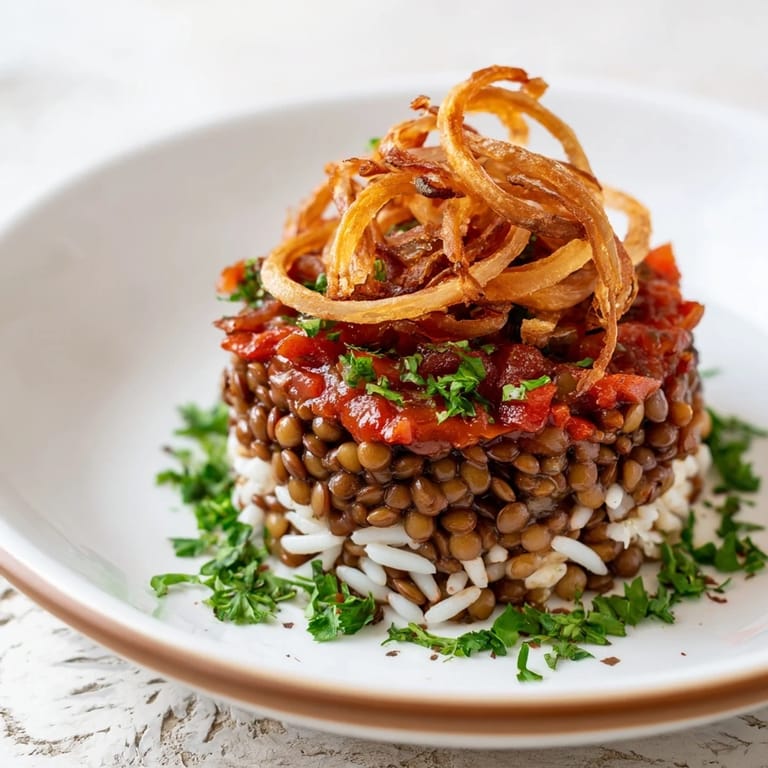
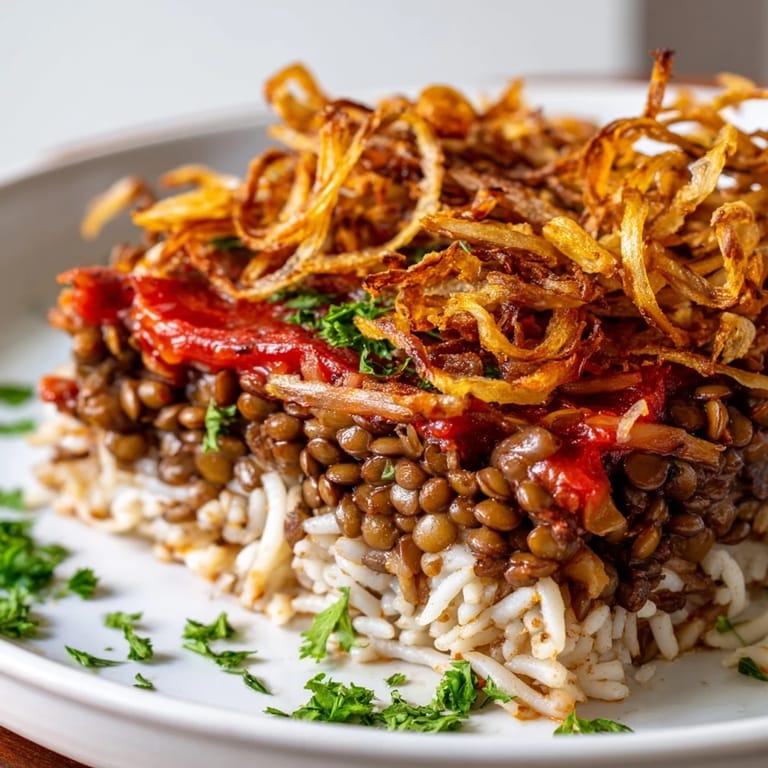
- In individual bowls or on a large platter, create layers: rice first, then lentils, then pasta. Top generously with your warm tomato sauce, scatter the crispy onions over everything, add a drizzle of garlic vinegar if you like, and finish with fresh parsley if you have it. The beauty is that each person gets all the elements in every bite.
 Pin It
 My neighbor, who grew up eating koshari every week at street stalls, watched me plate it once and said, "You've got it right," which meant more to me than any fancy cooking compliment ever could. That's when I knew this dish wasn't just about nourishment—it was about respecting a tradition and making it your own at the same time.
Why This Dish Works
Koshari succeeds because it's not trying to be complicated or impressive—it's honest food built on contrast. The soft lentils play against the slight chew of rice and pasta, the warm spiced sauce coats everything, and then those crispy onions arrive like a punchline, adding texture and a little bit of attitude. It's the kind of dish that makes nutritionists happy and comfort-food lovers equally satisfied, which is rare enough to be worth celebrating. The fact that it's entirely plant-based is almost beside the point, because nobody eats koshari for the vegetables—they eat it because it tastes good.
Making It Your Own
Once you understand the basic formula, koshari becomes endlessly adaptable without losing its soul. If you have vegetable broth instead of water, use it for cooking the rice or lentils—it deepens everything. If orzo or vermicelli appeals to you more than elbow pasta, make that swap; the shape matters less than the texture. Some people like their koshari swimming in extra sauce, while others prefer just enough to coat, so serve extra sauce on the side and let people decide.
The Right Way to Serve
Koshari tastes best served hot, right after assembly, when the sauce is still steaming and the onions are at peak crispiness. It's a dish that invites personalization, so don't be shy about offering hot sauce, extra vinegar, or fresh herbs on the side—some people will want to push the flavors in different directions, and that's part of the charm. This isn't fussy food; it's meant to be enjoyed casually, even hungrily, and that's exactly how you should approach making and eating it.
- Make the sauce ahead if you need to; it actually tastes better the next day, but fry the onions and assemble only when you're ready to eat.
- Double the sauce recipe and freeze half—it's invaluable to have on hand for quick meals.
- Koshari reheats well in a low oven, though the onions will soften, so add fresh crispy onions on top when you serve leftovers.
 Pin It
 Koshari has taught me that the most satisfying meals often come from places where necessity meets creativity, where street vendors figured out how to make something delicious and filling from humble ingredients. Making it reminds me why simple food, made with care, never goes out of style.
Recipe Questions & Answers
- → What grains are used in Koshari?
It features medium-grain rice, brown or green lentils, and small elbow macaroni or ditalini pasta.
- → How is the tomato sauce prepared?
The sauce is made by sautéing onions and garlic, then simmering crushed tomatoes with tomato paste, cumin, coriander, chili flakes, sugar, salt, and pepper until thick.
- → How are the crispy onions made?
Thinly sliced onions are coated in flour and salt, then fried in hot oil until golden brown and crisp.
- → Can the chili flakes be omitted or adjusted?
Yes, chili flakes are optional and can be adjusted to suit your preferred heat level.
- → What is the purpose of garlic vinegar?
Garlic vinegar is an optional tangy garnish made by combining vinegar, minced garlic, and chili flakes to add brightness and contrast.