 Pin It
 There's something almost magical about discovering that you don't need cream to make pasta silky—that starchy pasta water can do the heavy lifting all on its own. I learned this on a Tuesday night when I was out of cream and had a craving for something rich and comforting. The bacon was already sizzling in the pan, filling the kitchen with that unmistakable smoky smell, and somehow the simplicity of what came next felt like a small kitchen victory. This linguine has been my go-to ever since, especially on nights when I want something impressive but don't have time to fuss.
I made this for my neighbors last spring when we decided to do a casual pasta night on the patio, and I watched someone's face light up when they realized there was no cream in the sauce. They kept asking what my trick was, and I loved that the answer was simply respecting the starch and the pasta water. It became the dish I'd make when I wanted to feel like a proper cook without the pretension.
Ingredients
- Linguine (400 g): Use good quality pasta—it makes a real difference in how the sauce clings to it, and thinner strands work better than thick ones for picking up that silky coating.
- Bacon (200 g, diced): Don't use those paper-thin slices; proper bacon with some thickness will give you those golden, crispy bits that anchor the whole dish.
- Olive oil (2 tbsp): This helps render the bacon fat and creates the base for everything else, so use something decent that you actually like the taste of.
- Garlic (3 cloves, finely chopped): Mince it small so it distributes evenly and doesn't overpower with big chunks—it should be almost melted into the sauce.
- Black pepper (1/2 tsp, freshly ground): Fresh pepper makes a real difference here; pre-ground pepper tastes tired by comparison, and this dish deserves better.
- Red pepper flakes (1/4 tsp, optional): A whisper of heat can wake up the whole plate, but it's genuinely optional if you prefer mild.
- Reserved pasta water (1/2 cup): This is the magic ingredient—the starch is what creates the sauce, so don't skip it or substitute with broth.
- Parmesan cheese (40 g, grated): Freshly grated makes this creamy and silky; pre-grated cheese has additives that prevent it from melting smoothly into the sauce.
- Fresh parsley (2 tbsp, chopped): It's not just decoration—the brightness cuts through the richness and makes everything feel lighter.
- Lemon zest (optional): Even a tiny amount adds a subtle brightness that reminds you this dish is actually quite simple and elegant.
Tired of Takeout? 🥡
Get 10 meals you can make faster than delivery arrives. Seriously.
One email. No spam. Unsubscribe anytime.
Instructions
- Start the water and pasta:
- Fill a large pot generously with cold water, add a good pinch of salt so it tastes like the sea, and bring it to a rolling boil. Drop in your linguine and stir right away so the strands don't clump together. Cook it exactly to al dente—it should have a slight resistance when you bite it, not mushy, not hard.
- Get the bacon golden:
- While the pasta cooks, heat the olive oil in a large skillet over medium heat and add your diced bacon. Let it cook slowly, stirring occasionally, until the edges are deeply golden and crispy—this takes about 6 to 8 minutes, and the sound of it sizzling will tell you when it's getting close. Save some of those bacon bits on the surface for garnish if you like textural contrast.
- Bloom the garlic gently:
- Drop the heat to low and add your finely chopped garlic to the hot bacon and oil. Stir it around for just about a minute until it becomes fragrant and starts to soften, but watch it closely because burned garlic tastes bitter and there's no fixing that. Add the black pepper and red pepper flakes if you're using them right now, while everything's warm.
- Bring it all together:
- Drain your pasta but before you do, scoop out about half a cup of that starchy cooking water into a measuring cup—this is your secret weapon for the silky sauce. Toss the hot, drained linguine directly into the skillet with the bacon, then pour in a quarter cup of the pasta water and toss everything together over low heat. Watch as the sauce starts to come together; if it looks too dry, add a splash more water a little at a time until you get a glossy, silky coat.
- Finish with cheese and herbs:
- Remove the pan from heat and sprinkle in your freshly grated Parmesan, tossing quickly so it melts evenly into the hot pasta without clumping. Add the fresh parsley and lemon zest if you're using it, toss one final time, and taste for seasoning—add a crack of fresh pepper and a touch more salt if needed.
- Serve while it's hot:
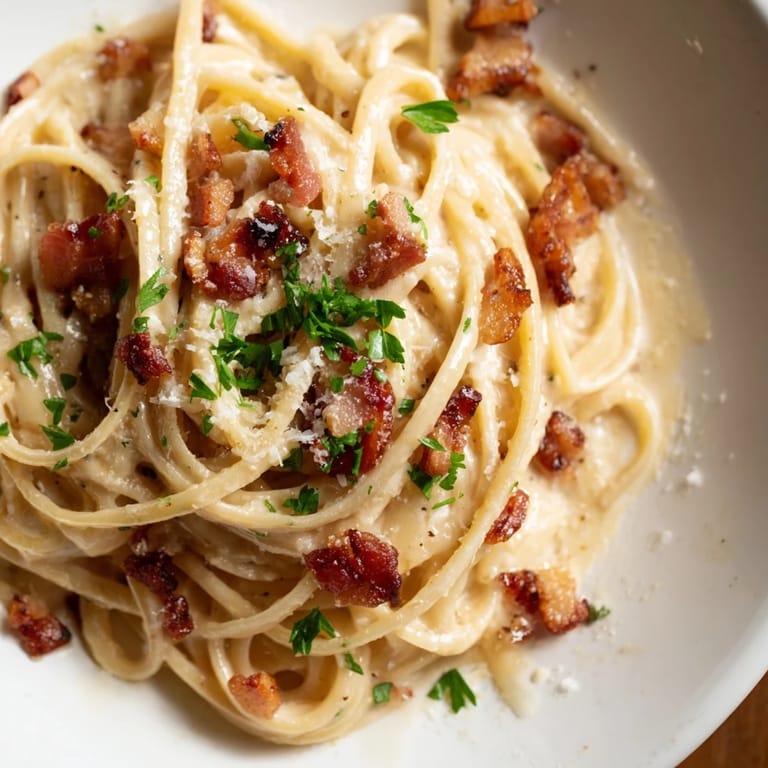
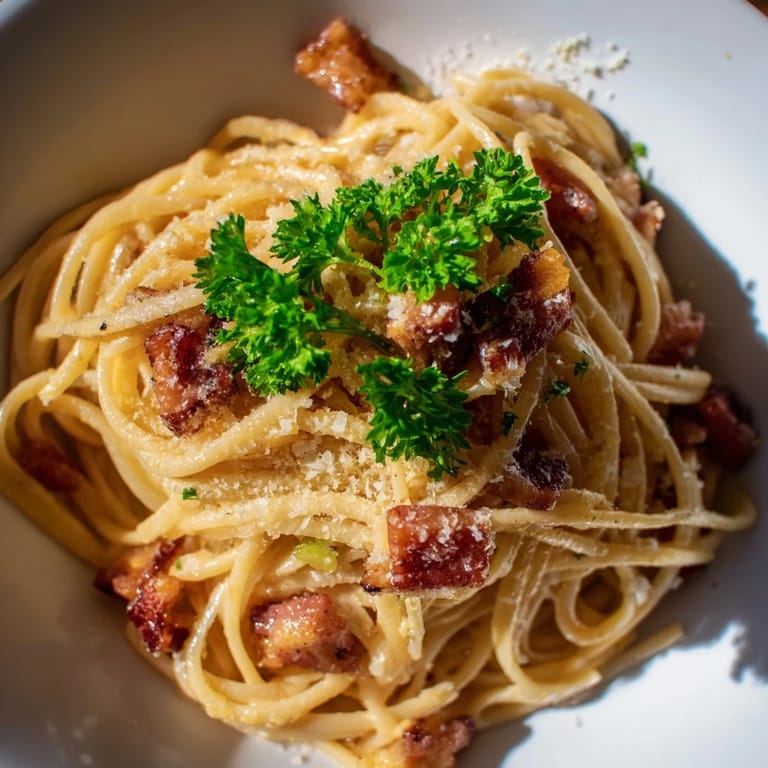
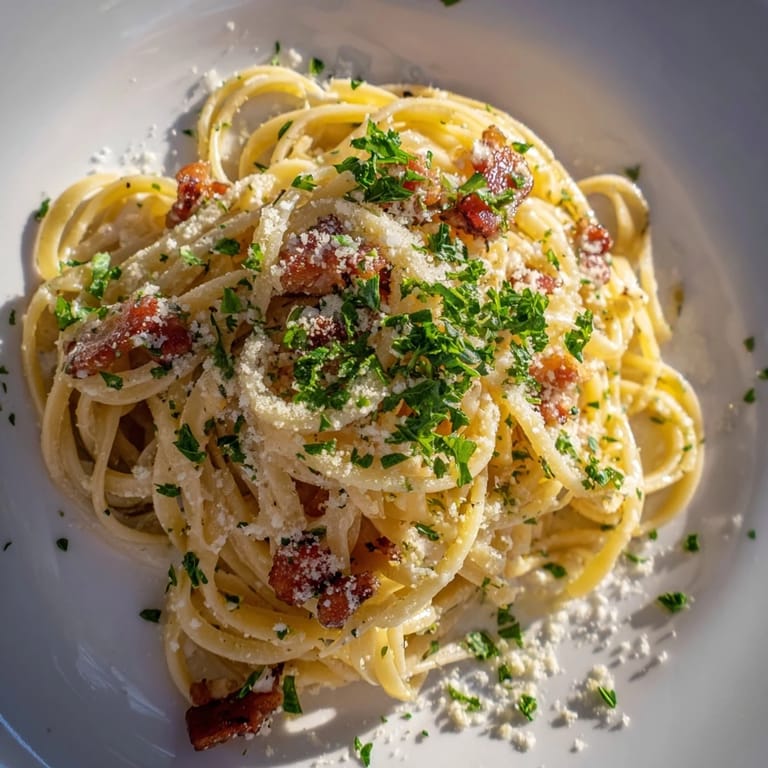
- Divide the linguine among bowls or plates immediately, because this dish is best eaten right away while the sauce is still silky and warm. Top each portion with extra Parmesan and a grind of black pepper, and maybe a few reserved crispy bacon bits if you saved them.
 Pin It
 There's a moment, just after you toss everything together and the sauce starts to cling to the pasta, where you feel like you've unlocked something. It's not fancy or complicated, but it's unmistakably delicious, and that's the kind of cooking moment that sticks with you.
Why Pasta Water Changes Everything
The starch in pasta water is like a kitchen shortcut that doesn't feel like cheating because you're not skipping steps—you're just being smart about what you already have. I used to think creamy sauces required cream, and then one day I really paid attention to what was actually happening when I tossed hot pasta with fat and liquid, and suddenly it all made sense. The emulsion that forms is just as luxurious, just as silky, and it tastes cleaner because nothing's drowning out the flavor of the bacon and garlic.
Timing Is Your Friend Here
The whole point of this dish is that it comes together quickly, which means you need to have everything prepped and ready before you start cooking. Dice your bacon, chop your garlic, grate your cheese, and measure your pasta water before you even turn on the stove—then the actual cooking is just a series of smooth movements with no scrambling. I learned this the hard way when I was caught mid-garlic-chopping with bacon already sizzling, and I'll never do that again.
Ways to Make It Your Own
This recipe is a solid foundation that welcomes small changes without falling apart. You can add a handful of frozen peas right when you add the pasta water, or some mushrooms you've sautéed separately, and either one feels like you've elevated it slightly without making it complicated. A squeeze of fresh lemon juice instead of just the zest can brighten the whole plate, and some people swear by a pinch of nutmeg, though I've never tried it.
- Use turkey bacon or pancetta if pork bacon isn't your preference, and adjust your cooking time based on how thick it is.
- A small splash of white wine added right after the garlic blooms can add depth, but reduce it quickly so the sauce isn't too wet.
- Fresh thyme leaves scattered over the top at the very end add an herbal note that catches people off guard in the best way.
 Pin It
 This is the kind of dinner that reminds you why cooking at home is worth the effort—it's fast enough for a weeknight, impressive enough for guests, and simple enough that you can make it without thinking too hard. Serve it with a cold glass of something crisp, and you've got an evening that feels like a small celebration.
Recipe Questions & Answers
- → Can I use a different type of pasta?
Yes, linguine can be substituted with other long pasta shapes like fettuccine, spaghetti, or bucatini. These shapes work equally well for coating with the silky sauce.
- → Why is reserving pasta water important?
Pasta water contains starch that emulsifies with the fat and cheese, creating a creamy sauce without cream. This starch is essential for achieving the silky coating that binds the ingredients together.
- → How do I keep the garlic from burning?
Reduce the heat to low before adding garlic and sauté for only about 1 minute. Keep the heat gentle and watch carefully, as garlic burns quickly and becomes bitter if overcooked.
- → Can I make this dish ahead of time?
This pasta is best served immediately after preparation. If needed, you can cook the bacon in advance and reheat it gently before combining with the other ingredients.
- → What wine pairs well with this dish?
A crisp white wine like Pinot Grigio complements the richness of the bacon and cheese beautifully. The acidity cuts through the silky sauce and refreshes the palate between bites.
- → How can I add more vegetables to this dish?
Sautéed mushrooms, peas, or fresh spinach work wonderfully. Add them to the skillet after the bacon is cooked, or fold in fresh vegetables at the end for added nutrition and flavor.