 Pin It
 I discovered this curry entirely by accident on a Tuesday when my farmer's market haul had gotten out of hand. The broccoli, peppers, and zucchini were piling up on my counter, and I'd just cracked open a can of coconut milk meant for something else. Within twenty minutes, my kitchen smelled like turmeric and ginger in a way that made everything feel intentional, even though I was mostly improvising. Now it's become the dish I make when I want something that tastes impressive but doesn't demand much fussing.
I'll never forget when my mom came over and I served her this without explaining what I'd made. She took one bite and asked where I'd ordered from, which felt like winning. The sauce coats everything so perfectly that even the skeptical eaters in my life started asking for seconds.
Ingredients
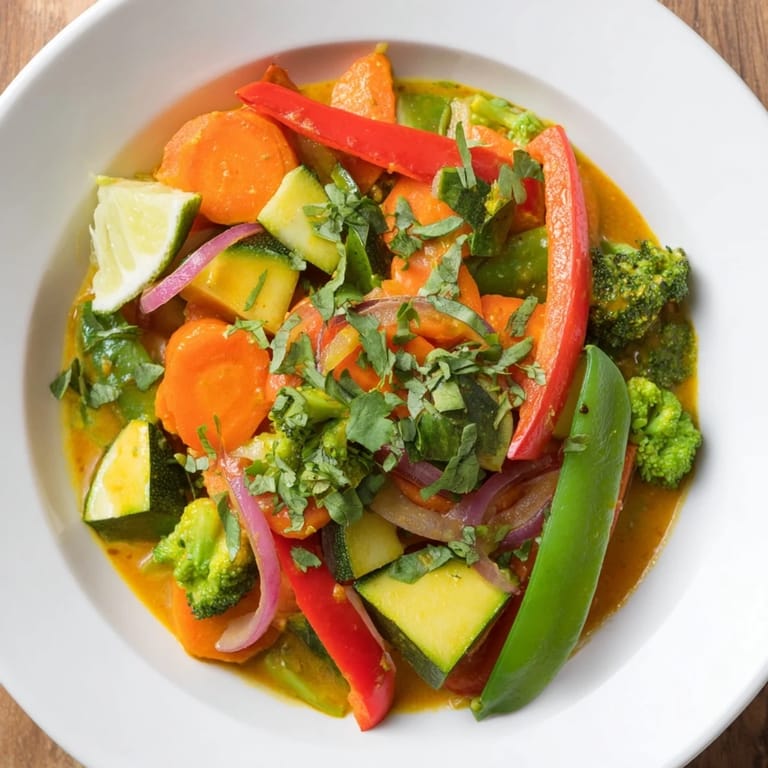
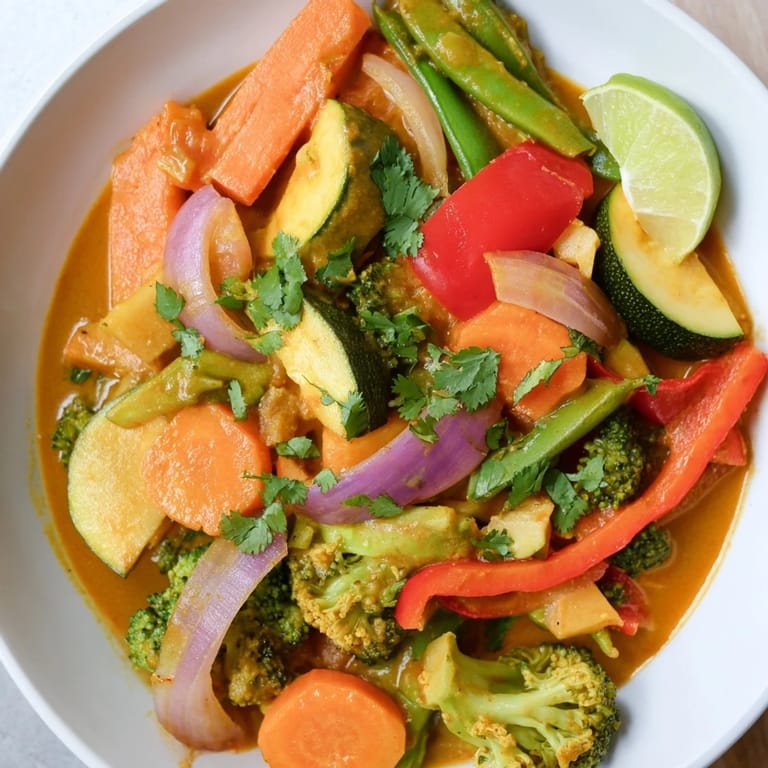
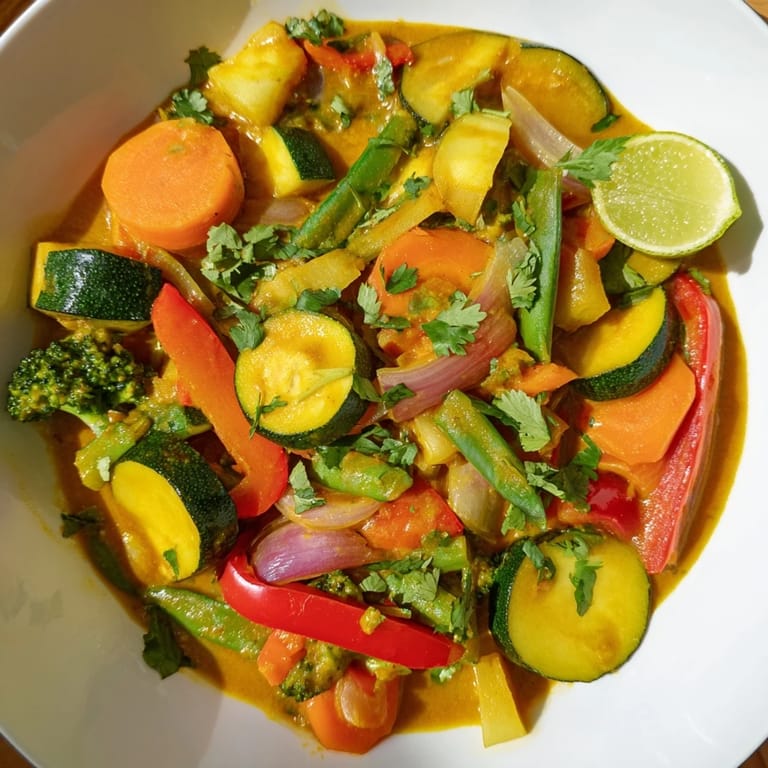
- Red bell pepper, carrot, zucchini, and broccoli: These are your main players, and the beauty is they all cook at roughly the same speed if you cut them similarly sized. I've learned to slice the pepper and carrot a touch thicker than the zucchini so nothing turns to soup.
- Snap peas: These go in near the end to keep their slight crunch, which makes every spoonful interesting.
- Red onion: Gets soft and sweet as it cooks down, becoming almost invisible but somehow essential.
- Coconut oil: The base of everything—it lets the spices bloom without tasting greasy.
- Garlic and ginger: Mince these small; you want them distributed throughout, not sitting in chunks.
- Red curry paste: This is the flavor anchor, so don't skip it or dilute it with substitutes. Check the label if you're cooking for vegans; some brands sneak in fish sauce.
- Turmeric, cumin, and coriander: Ground spices that add warmth and depth without heat. Toast them briefly in the oil before adding the vegetables, and they'll taste fresher.
- Coconut milk and vegetable broth: Full-fat coconut milk makes the sauce silky. The broth keeps it from becoming too heavy while still tasting rich.
- Soy sauce or tamari: Just a touch of umami to round out everything. Use tamari if you're cooking gluten-free.
- Lime juice: Squeezed at the very end, it's the brightness that makes you notice all the other flavors.
- Fresh cilantro: Totally optional, but it changes the whole feel from comforting to vibrant in one handful.
Tired of Takeout? 🥡
Get 10 meals you can make faster than delivery arrives. Seriously.
One email. No spam. Unsubscribe anytime.
Instructions
- Start the base:
- Heat the coconut oil over medium heat until it's shimmering and smells nutty. Add the red onion and let it soften for a couple minutes—you want it almost translucent at the edges. This is where patience pays off; rushing this step means the onion won't sweeten properly.
- Wake up the aromatics:
- Drop in the garlic and ginger and stir constantly for about a minute. Your kitchen should smell incredible at this point, and that's how you know they're releasing their oils. If it starts to brown, pull the pan off the heat for a second.
- Build the spice layer:
- Add the curry paste and ground spices right into that garlicky oil. Stir without stopping for a minute so the spices toast slightly and lose their raw edge. This step is what separates a good curry from a thin-tasting one.
- Add the vegetables:
- Toss in the bell pepper, carrot, zucchini, and broccoli. Stir them around in the spiced oil for a few minutes so they all get coated. This quick sauté helps them cook more evenly than if you dump them straight into liquid.
- Simmer everything together:
- Pour in the coconut milk and broth, and let it come to a gentle bubble. This is a simmer, not a boil—too aggressive and the vegetables lose their texture. Add the snap peas and soy sauce, then cover and let it go for about ten minutes. You want the vegetables tender but still holding their shape.
- Finish with brightness:
- Remove from heat, squeeze in the lime juice, and taste. Adjust the salt and pepper to your preference; everyone's palate is different. The lime should just pop against all those warm spices.
 Pin It
 There's something almost magical about how a few spices and coconut milk can turn a pile of vegetables into something that feels like a complete meal. My partner now associates this dish with Friday nights when we're too tired to think about cooking but too hungry to order out.
Vegetables You Can Swap In
The beauty of this curry is its flexibility. I've thrown in cauliflower florets, green beans, mushrooms, and even spinach at the end without throwing off the balance. The golden rule is to keep pieces roughly the same size so they finish cooking at the same time. If you use something watery like mushrooms or tomatoes, reduce them slightly before adding the coconut milk, or the sauce becomes thin.
Making It Heartier
On nights when I want more protein, I'll stir in a can of drained chickpeas during the simmer, or crumble in some firm tofu a few minutes before serving. Either one absorbs the spice beautifully and makes the dish feel more substantial without making you feel too full. I've also added a handful of spinach at the very end and let it wilt right into the sauce.
How to Serve and Store
This curry is best served over jasmine rice, quinoa, or even buttered noodles if you're in that kind of mood. Leftovers keep well in the fridge for about three days, and reheated on the stove (not the microwave, if you can help it) they taste almost better than fresh.
- Pair it with naan or roti for a more authentic experience, or keep it light with cauliflower rice.
- If you're making it for company, double the batch—it's worth having extra, and it actually tastes better when there's more of it simmering together.
- The whole thing comes together faster if you do your prep work before you start cooking, so get all your vegetables cut and spices measured before you turn on the heat.
 Pin It
 This is the kind of dish that quietly becomes a favorite, the one you make when you want to feel like you've cooked something real but don't have the energy for anything complicated. It's honest food.
Recipe Questions & Answers
- → What vegetables work best in this dish?
Bell peppers, carrots, zucchini, broccoli, snap peas, and red onions create a vibrant and balanced mix, but you can also add cauliflower, green beans, or mushrooms.
- → Can I adjust the spice level?
Yes, modify the amount of red curry paste to make the dish milder or spicier according to your taste preferences.
- → What are good protein options to add?
Chickpeas or tofu can be added during cooking to provide extra protein and enrich the dish.
- → Which side dishes complement this preparation?
Steamed jasmine rice, quinoa, or naan bread pair wonderfully to balance the rich coconut flavors.
- → How can I make it soy-free?
Replace soy sauce or tamari with coconut aminos to keep it soy-free while maintaining savory depth.