 Pin It
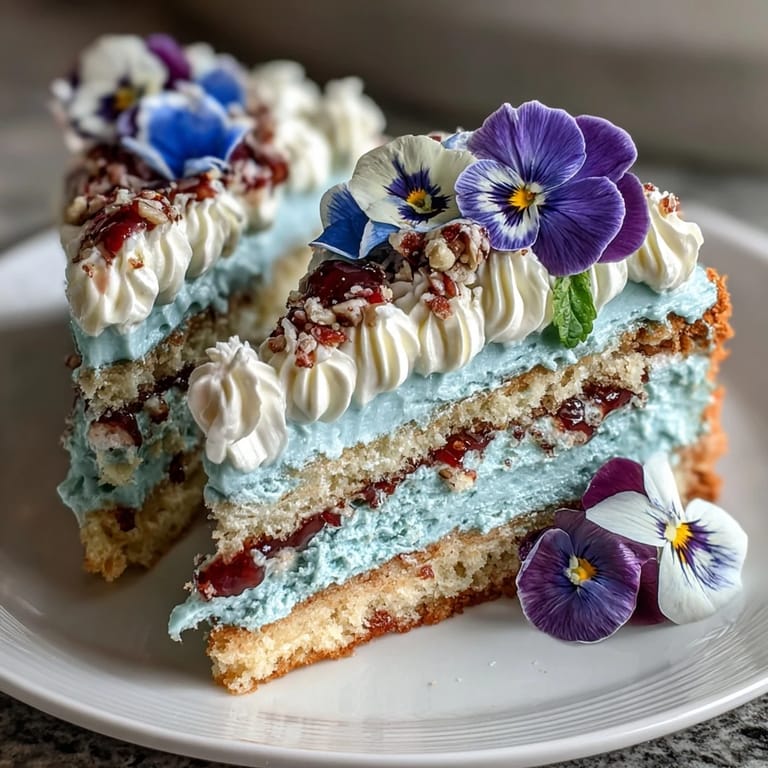
 My neighbor knocked on the door one April morning with a basket of violets from her garden, asking if I could do something special with them for her daughter's bridal shower. That's when I realized I'd been making vanilla cakes for years but never truly celebrated their simplicity by pairing them with something as delicate as pressed flowers. This cake became my answer—a study in restraint and elegance, where the cake itself stays quietly buttery while the frosting and flowers do the talking.
I still think about the shower when I make this cake—how my neighbor's daughter laughed when she saw the pressed pansies catching the light, and how someone asked for the recipe before even tasting it. That's the magic of this one: people connect with it emotionally before they ever fork into a bite. Since then, I've made it for spring weddings, garden parties, and once just because I needed to remember that good things take time.
Ingredients
- All-purpose flour (2 1/2 cups): Use good-quality flour—I learned the hard way that bargain brands can make the crumb dense rather than feathery.
- Baking powder (2 1/2 tsp): Fresh baking powder matters here; check your container's date because stale leavening won't give you that tender rise.
- Salt (1/2 tsp): It sounds like nothing, but salt is what makes the vanilla flavor pop instead of fade into the background.
- Unsalted butter (1 cup), softened: Room temperature is non-negotiable—cold butter won't cream properly and you'll end up with a tough cake.
- Granulated sugar (1 3/4 cups): The sweetness should be bright but not cloying; this ratio lets the vanilla and flowers shine.
- Eggs (4 large), room temperature: Cold eggs create lumps in the batter and uneven texture, so take them out of the fridge 30 minutes before you start.
- Pure vanilla extract (1 tbsp): Don't skimp here—imitation extract tastes thin and flat in a cake this simple.
- Whole milk (1 cup), room temperature: The milk keeps the cake tender and moist without making it greasy; avoid buttermilk unless you want a different flavor profile.
- Heavy whipping cream (2 cups), cold: The frosting depends on cream that's truly cold, so chill your bowl and beaters beforehand.
- Powdered sugar (1/2 cup): Sift it first to remove lumps or your frosting will have grainy bits.
- Pressed edible flowers (1/2–1 cup): Use only organically grown flowers—no pesticides, no surprises—and press them between parchment and heavy books for at least 24 hours before decorating.
- Fresh mint leaves (optional): A few green leaves scattered between flowers keep the design from feeling one-note.
Tired of Takeout? 🥡
Get 10 meals you can make faster than delivery arrives. Seriously.
One email. No spam. Unsubscribe anytime.
Instructions
- Prepare your pans and heat the oven:
- Set the oven to 350°F and grease two 8-inch round pans, then line them with parchment paper cut to fit the bottoms—this step prevents sticking and makes turning out the cakes almost foolproof. It takes two minutes and saves you heartbreak later.
- Dry ingredients unite:
- Sift flour, baking powder, and salt together into a bowl and set it aside; sifting aerates the flour and ensures the leavening distributes evenly throughout the cake. This is where you start building a tender crumb.
- Cream the butter and sugar:
- Beat softened butter and sugar together for 3–4 minutes until the mixture looks pale and fluffy, like whipped clouds—you're incorporating air that will help the cake rise. Listen for the mixer to slow down as the mixture becomes light; that's your signal you're there.
- Add eggs carefully:
- Add eggs one at a time, letting each one fully combine before adding the next, about 20 seconds of mixing per egg. Rushing this step can cause the batter to break and separate, resulting in a dense cake.
- Vanilla moment:
- Stir in the vanilla extract and pause for a second to breathe in that warm, sweet smell—it's the heart of this cake right there.
- Gentle flour and milk dance:
- Add the flour mixture in three additions, alternating with milk and starting and ending with flour, mixing until just combined each time. Overmixing develops gluten, which makes the cake tough, so stop as soon as you don't see streaks of flour.
- Fill the pans:
- Divide the batter evenly between the prepared pans and smooth the tops so they bake evenly; uneven surfaces create doming.
- Bake with patience:
- Bake for 30–35 minutes until a toothpick inserted in the center comes out clean or with just a crumb or two. Every oven runs differently, so start checking at 28 minutes.
- Cool with respect:
- Let the cakes sit in their pans for 10 minutes—this allows them to set enough to handle without tearing—then turn them out onto wire racks to cool completely. A warm cake is fragile; cool cake is stable.
- Whip the frosting:
- In a chilled bowl with chilled beaters, whip cold heavy cream with powdered sugar and vanilla until stiff peaks form, which takes about 2–3 minutes. Watch carefully because the difference between perfect frosting and butter happens in seconds.
- Assemble with care:
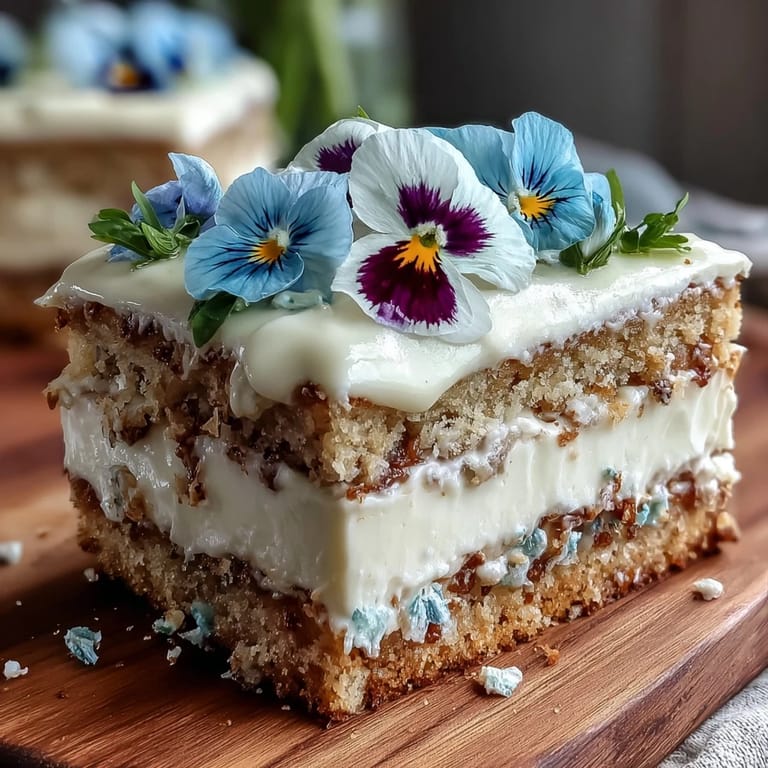
- Place one cake layer on your serving plate, spread a generous layer of whipped cream on top, then place the second layer on top and frost the top and sides. The frosting should be thick enough to support the flowers without sliding.
- Press flowers into place:
- Gently but firmly press your pressed flowers onto the sides and top of the cake, working with tweezers if your fingers are clumsy—the flowers should stay put, not flutter away. Arrange mint leaves in the gaps if you want.
- Chill before serving:
- Refrigerate the cake for at least 30 minutes so the frosting sets and the flowers adhere properly. This also gives you a moment to step back and admire what you've made.
 Pin It
 There's something almost meditative about decorating this cake—standing in the kitchen, tweezers in hand, placing one flower at a time until it becomes a small work of art. I've learned that this quiet moment before the cake leaves my hands is where the real magic happens, where I'm not just feeding people but offering them something I've thought about and cared for.
The Pressing Ritual
Pressed flowers demand planning, which is actually a gift if you think about it. Pick your flowers a day or two before you bake—make sure they're dry and unsprayed—then arrange them between two sheets of parchment paper and weight them down with heavy books. A cookbook, a dictionary, anything dense will work. The pressing process removes moisture and flattens the petals, making them look almost like stained glass when they catch the light on the finished cake.
Why Vanilla Matters Here
In a cake this simple, vanilla isn't a supporting actor—it's the whole reason the cake tastes sophisticated. The butter, eggs, and milk work together to create a tender crumb that carries the vanilla flavor through without competing with the flowers. I used to think vanilla cakes were boring until I realized that simplicity is its own kind of elegance, especially when you use pure extract and fresh ingredients.
Storing and Serving Advice
This cake is actually better the day after you make it because the flavors marry and the frosting sets completely. Keep it covered in the refrigerator for up to two days—the cool temperature keeps the frosting firm and the flowers in place. If you're serving it at a warm outdoor event, keep it in a cooler until the last moment and assemble on-site if you can, because whipped cream frosting and heat are not friends.
- Slice with a hot, wet knife, wiping it clean between cuts, and the frosting will stay pristine and pretty.
- Pair it with sparkling wine, a floral tea, or something as simple as strong black coffee to cut through the sweetness.
- If you're making this for a special occasion, decorate it the morning of serving so the flowers look fresh and the frosting hasn't absorbed any flavors from the refrigerator.
 Pin It
 Every time I make this cake, I remember why I love baking: it's one of the few things in life where you get to create something beautiful that also nourishes people. This one, with its tender crumb and whisper-soft frosting and those pressed flowers, feels like spring itself on a plate.
Recipe Questions & Answers
- → How do I prepare the pressed edible flowers?
Press edible flowers between parchment paper and heavy books for at least 24 hours to achieve a flat, dry texture suitable for decoration.
- → Can I substitute the heavy cream in the frosting?
Heavy cream is recommended for stable whipped frosting, but full-fat coconut cream can be used as a dairy-free alternative.
- → What types of flowers are safe for this decoration?
Use organically grown, pesticide-free flowers like violets, pansies, nasturtiums, rose petals, and chamomile.
- → How should I store the cake after decorating?
Keep the cake refrigerated and consume within 2-3 days to preserve freshness and flower appearance.
- → Is there a tip to keep the cake moist?
Ensure not to overmix the batter and properly cool the cake before frosting to retain moisture and texture.