 Pin It
 My sister texted me a photo of her graduation cap mid-throw, and suddenly I was standing in my kitchen at 6 AM on a Saturday, realizing I'd promised to bring a cake to her party. No time for complicated layers or temperamental decorations—just a straightforward vanilla sheet cake that would feed everyone and let me actually enjoy the celebration instead of stressing in the kitchen. That's when I understood the magic of a good sheet cake: it's confidence disguised as simplicity.
Standing in the bakery section of the grocery store, watching people stress over fondant work, I felt oddly grateful for my sheet pan choice. When I pulled this cake out of the oven and caught that vanilla-butter aroma filling the house, I knew I'd made the right call. My niece was the first to try a corner piece, and she closed her eyes like it was the best decision she'd made all day—which, given the gravity of graduation, felt like the highest compliment possible.
Ingredients
- All-purpose flour: This is your cake's backbone—measure it carefully or use a scale for consistency, because too much makes everything dense.
- Baking powder: Don't skip this or use old stuff from the back of your cabinet; it's what gives the cake that tender, cloud-like crumb.
- Salt: Just a pinch, but it brightens the vanilla and keeps the sweetness from feeling one-note.
- Unsalted butter, softened: Room temperature is non-negotiable here; cold butter won't cream properly and you'll fight it the whole way.
- Granulated sugar: Creaming this with butter creates the air pockets that make the cake light—don't rush this step to just 2 minutes.
- Eggs, at room temperature: Cold eggs don't integrate smoothly and can cause the batter to break; leave them out for 20 minutes if you forget.
- Vanilla extract: Use the real stuff if you can; it transforms an ordinary cake into something that tastes like care.
- Whole milk, at room temperature: Temperature matters because cold milk can seize the batter; measure it before you start baking.
- Powdered sugar, sifted: Sifting removes lumps and makes the frosting silky; don't skip this thinking it won't matter.
- Food coloring: School colors make this personal; gel colors work better than liquid if you're tinting large batches.
Tired of Takeout? 🥡
Get 10 meals you can make faster than delivery arrives. Seriously.
One email. No spam. Unsubscribe anytime.
Instructions
- Ready your pan and heat your oven:
- Preheat to 350°F while you prep the 9x13-inch pan with grease and parchment paper—this prevents sticking and makes removing the cake feel effortless. If you're nervous, double-line it.
- Build your dry ingredients foundation:
- Whisk flour, baking powder, and salt together in a medium bowl; this distributes the leavening evenly so every bite rises predictably. You'll notice how the flour becomes lighter and more aerated just from whisking.
- Cream butter and sugar until fluffy:
- Beat them together for a full 3 minutes—this step is where most home bakers rush and regret it later. You're looking for a pale, cloud-like texture that basically transforms in front of you around the 2-minute mark.
- Incorporate eggs one at a time:
- Add each egg individually and beat well, because this creates a stable emulsion that keeps the cake tender. The mixture might look separated after the first egg—keep going, because it comes back together.
- Add vanilla and begin the alternating method:
- Stir in vanilla, then alternate adding the flour mixture and milk in three parts, starting and ending with flour. This method prevents overmixing and keeps the crumb tender rather than tough.
- Pour and smooth:
- Transfer batter to your prepared pan and use an offset spatula to level the top—a smooth top bakes more evenly. Don't worry if it's not perfect; any unevenness disappears under frosting.
- Bake until golden and set:
- Bake 30–35 minutes until a toothpick inserted in the center comes out clean with just a few moist crumbs. The cake will smell incredible around minute 25, but resist opening the oven door.
- Cool completely before frosting:
- Let the cake cool in the pan on a wire rack for at least 30 minutes, then turn it out if desired or frost it right in the pan. Frosting a warm cake is a shortcut that leads to melted, greasy frosting—patience here matters.
- Make frosting that's cloud-soft:
- Beat softened butter until creamy, gradually add sifted powdered sugar, milk, vanilla, and salt, then whip for 3–5 minutes until it's fluffy and light. Stop occasionally and taste it; this frosting is forgiving and you can adjust sweetness easily.
- Color and spread with confidence:
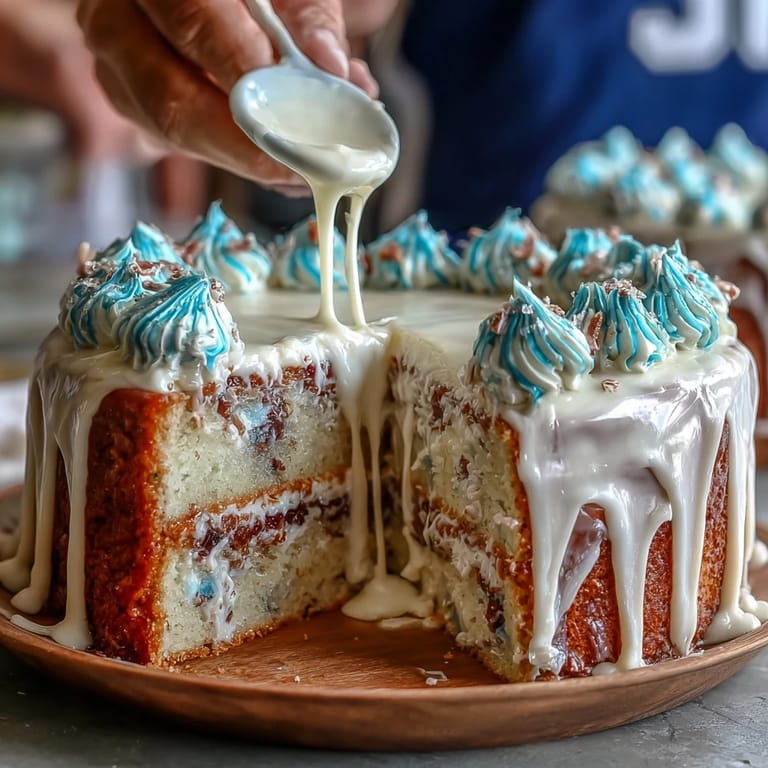
- Divide frosting into portions, tint with food coloring if desired, then spread an even layer over the cooled cake with an offset spatula. Work in long, smooth strokes rather than dabbing.
- Pipe your celebration message:
- Load colored buttercream into a piping bag with a small round tip and pipe Class of 2026 across the top—messy handwriting actually looks more charming than perfect lettering. Add sprinkles while the frosting is still soft so they stick.
 Pin It
 When my sister blew out her candles later that afternoon, surrounded by friends and family, I realized this simple cake had become the centerpiece of a memory. Nobody mentioned technique or complexity—they just kept coming back for another slice, which is exactly how you know you've made something right.
Variations That Work
I've experimented with this base cake more than a few times, and it's remarkably flexible. Once I added ½ teaspoon of almond extract to the batter, and it created this subtle depth that made people ask what the secret ingredient was; turns out there's magic in not being purely vanilla. Lemon zest stirred into the frosting transforms it into something bright and unexpected, perfect if you want to break from traditional vanilla-on-vanilla.
Decorating Beyond the Piping
The beauty of a sheet cake is that it doesn't demand perfection in decoration—in fact, casual looks more celebratory than fussy. I've topped these with everything from fresh berries scattered across the top to edible glitter mixed into the frosting, and each time it felt like a completely different cake. One time I piped a border around the edge using a grass tip, and even though it took five extra minutes, it made the whole presentation feel intentional.
Storage and Keeping
This cake actually improves slightly after a day, as the flavors settle and the crumb firms up just enough to be easier to serve. Covered with plastic wrap at room temperature, it stays fresh for 2 days; refrigerated, you get up to 5 days, though condensation can make the frosting weep if you don't let it come to room temperature before unwrapping. I usually store it uncovered in the fridge if I have space, since the frosting is sturdy enough to handle it.
- Don't refrigerate unless you need longevity; room temperature tastes better and you'll actually eat more of it.
- If you made extra frosting, it keeps in an airtight container in the fridge for up to a week and can be softened and re-whipped.
- Individual slices wrapped in plastic wrap freeze beautifully for up to a month, perfect for unexpected cake emergencies.
 Pin It
 This cake represents something simple and honest: showing up for the people you love with something handmade. That matters more than any complicated technique ever could.
Recipe Questions & Answers
- → What is the best pan size for this cake?
A 9x13-inch (23x33 cm) sheet pan works perfectly to ensure even baking and proper thickness.
- → Can I substitute non-dairy milk in the batter?
Yes, using non-dairy milk like almond or soy works well to accommodate dietary preferences without affecting texture.
- → How do I achieve the school colors in the frosting piping?
Use food-safe coloring to tint portions of the buttercream, then pipe with a small round tip to create precise decorations.
- → What is the recommended storage for this cake?
Store covered at room temperature for up to 2 days or refrigerate for up to 5 days to maintain freshness.
- → How can I add extra flavor to the cake batter?
Adding ½ teaspoon of almond extract enhances the vanilla base with a subtle nutty note.